



Brains are better on Bach
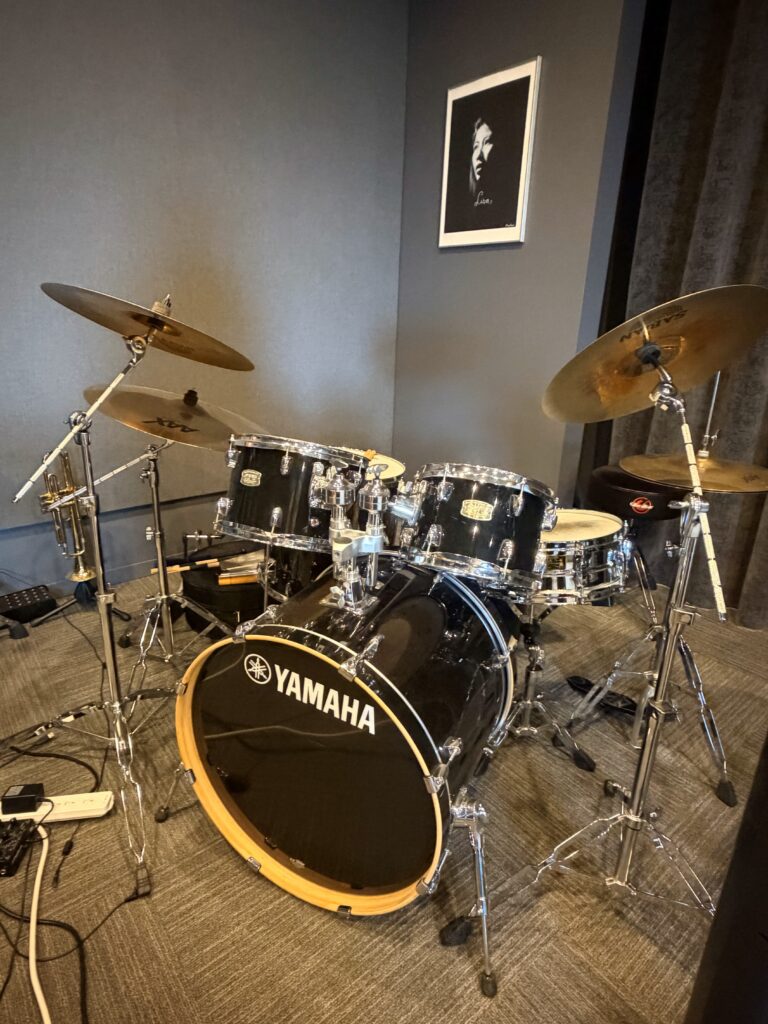
In addition to it just being a good time, there’s a reason why many of our employees fit playing music into their lunch breaks.
Playing an instrument engages nearly the whole brain at once: hands executing precise, independent movements, ears tracking pitch, eyes reading notation, all synced in real time by the cerebellum. MRI studies show musicians develop a measurably thicker corpus callosum — the bundle of fibers connecting the brain’s two hemispheres¹ — along with differences in prefrontal cortex activity, the region behind planning, working memory, and impulse control.² Musicians also hold onto neuroplasticity well, with some clear evidence that practice physically reshapes the brain.²
So, neuroscience literally makes the case for us that a trip to the music room during the day is a good idea.
Then there’s the nerding out on the mathematics part. Which, of course, we love.
Music is math in action
An octave is a 2:1 frequency ratio, and a perfect fifth is 3:2.
The idea that music could be built from ratios of small whole numbers dates back 2,500 years to ancient Greece and is traditionally credited to Pythagoras, whose school reportedly worked it out empirically using a monochord.³ Those pure ratios come with a small catch though: stack twelve perfect fifths all the way around the keyboard and they overshoot the octave they’re supposed to land back on by a hair, a bit under a quarter of a semitone.⁶ That mismatch is known as the Pythagorean comma, so an instrument tuned in pure fifths sounds beautiful in one key and noticeably off in another.⁷ Modern pianos solve this by spreading that small error evenly across all twelve fifths, a system called equal temperament, so every interval is slightly impure but every key is playable.⁷ Every piano tuned today still carries that same trade-off.
Rhythm works the same way. A measure in 4/4 time is just a repeating cycle, and a polyrhythm is two of those cycles layered together, locking into sync at their least common multiple, like 3-against-2 resolving every six beats. Millennia later, Fourier showed that any sustained sound, a violin note, a chord, etc. can be broken down into a sum of simple sine waves. A sharper transient like a drum hit isn’t quite so tidy, but the same core idea, decomposing sound into its underlying frequencies, extends to cover it too. That’s essentially signal processing.
Cool, huh?
The takeaway
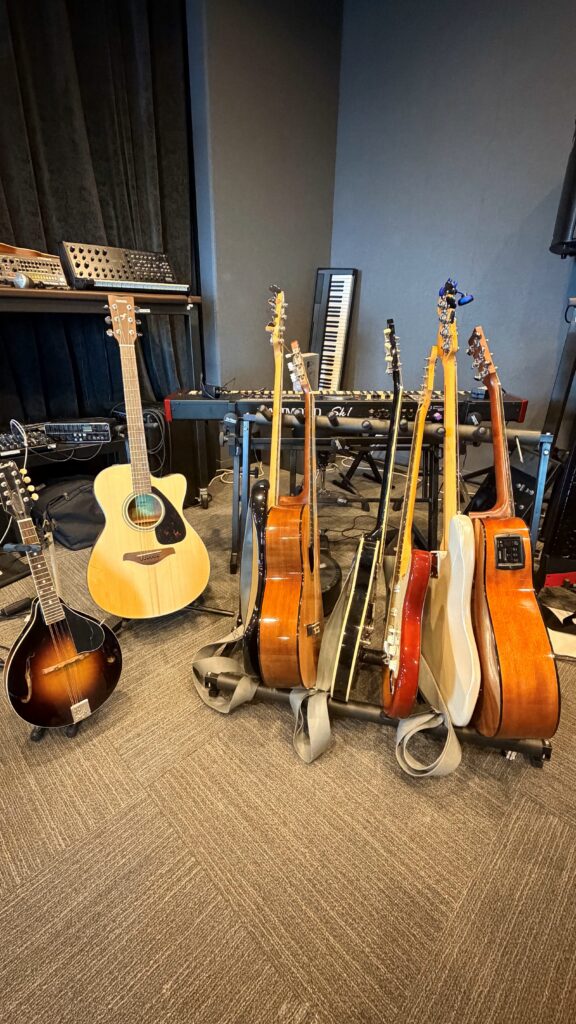
So, yes, we’ve invested in instruments as an office perk.
Mathematical inspiration and ways to sharpen our minds exist all around this place, and it’s the maybe unexpected, underlying connections between it all that make something as ordinary as a lunch break at Two Sigma anything but.
Now, sit back, relax, and enjoy a short video from our headquarters.