


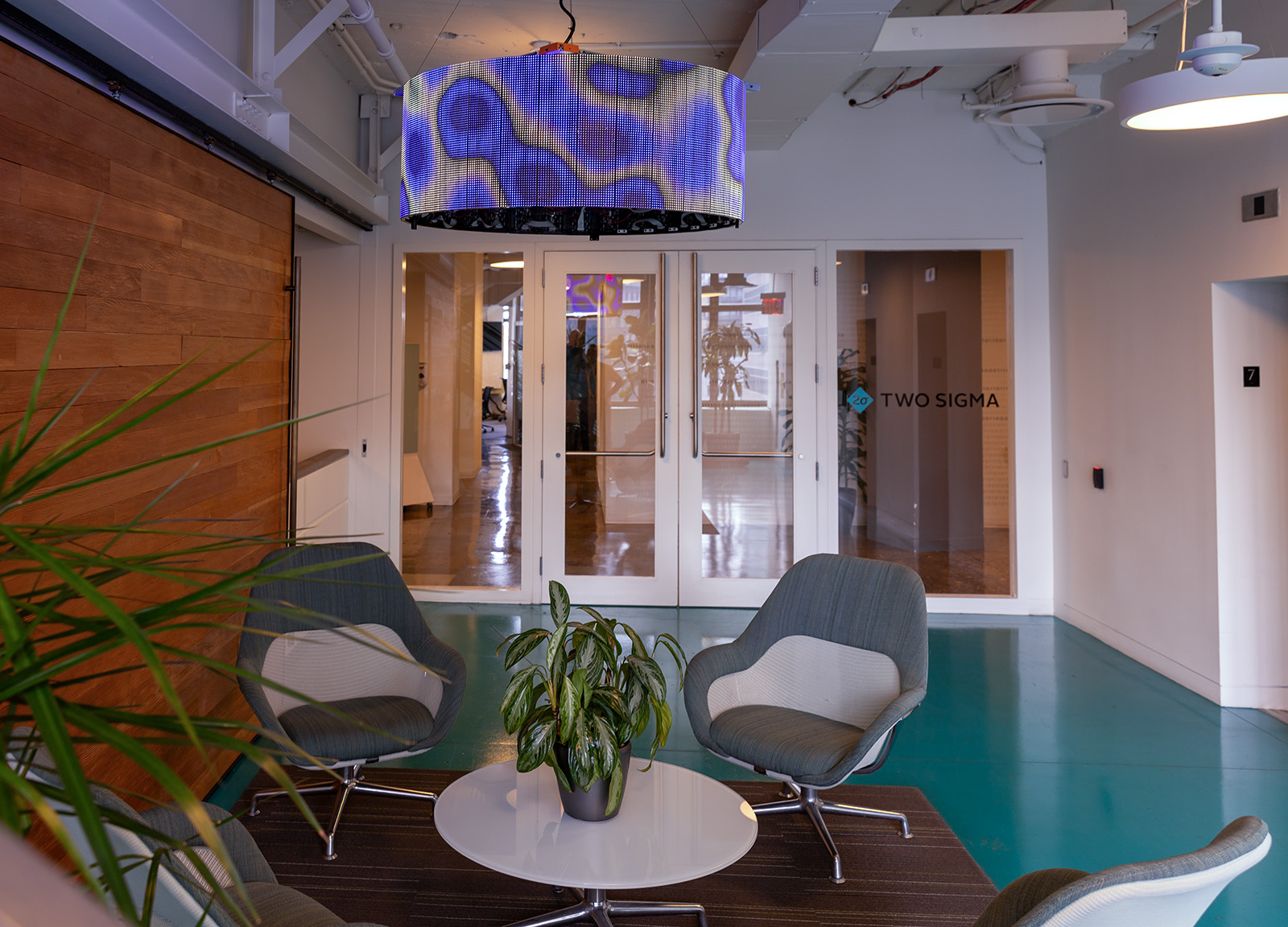
The seventh floor lobby of 100 Avenue of the Americas was my first glimpse inside Two Sigma. Here, in 2015, I interviewed for my role as a designer on the marketing team. When the elevator doors opened the first thing I saw was our employee-built Megascroller Chandelier, running a modded version of Super Mario. Then I walked past the binary code wall to an interview room with a clock only a mathematician could love (or decipher). Very quickly, I knew what sort of genial geniuses worked here.
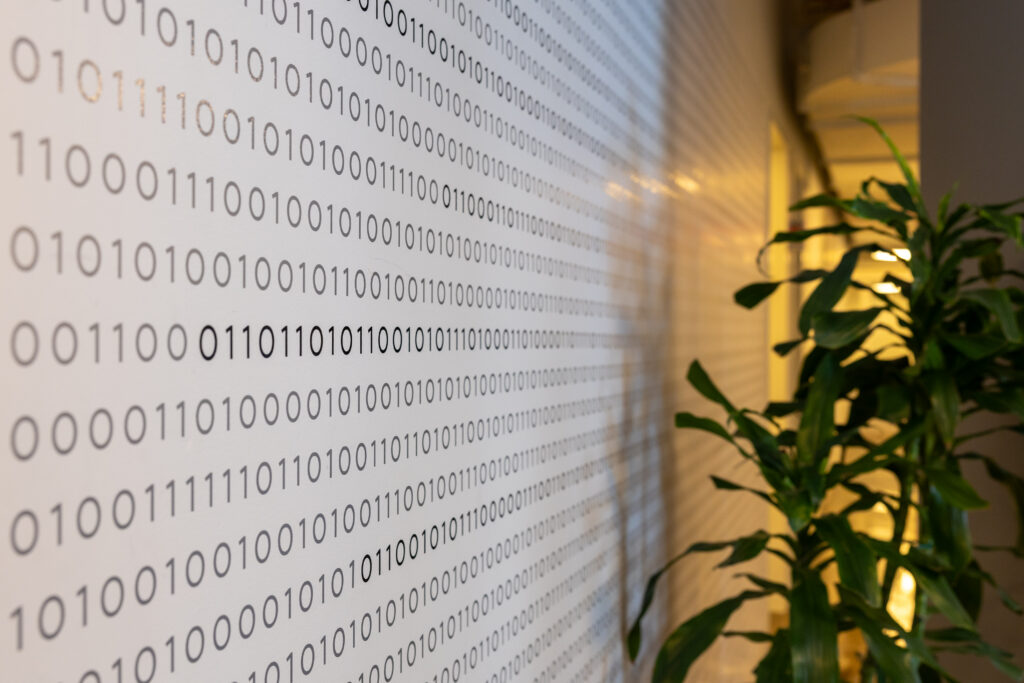
In the years since, that first impression has remained a polestar for the creative touches we tuck into our office environments. There’s a foundational truth about Two Sigma embedded in that binary code wall, and it flows from our company mission: to discover value in the world‘s data. Two Sigma hires exceptionally curious people – people who can see what others miss, who can decipher what others can’t, and who can turn those rare insights into alpha.
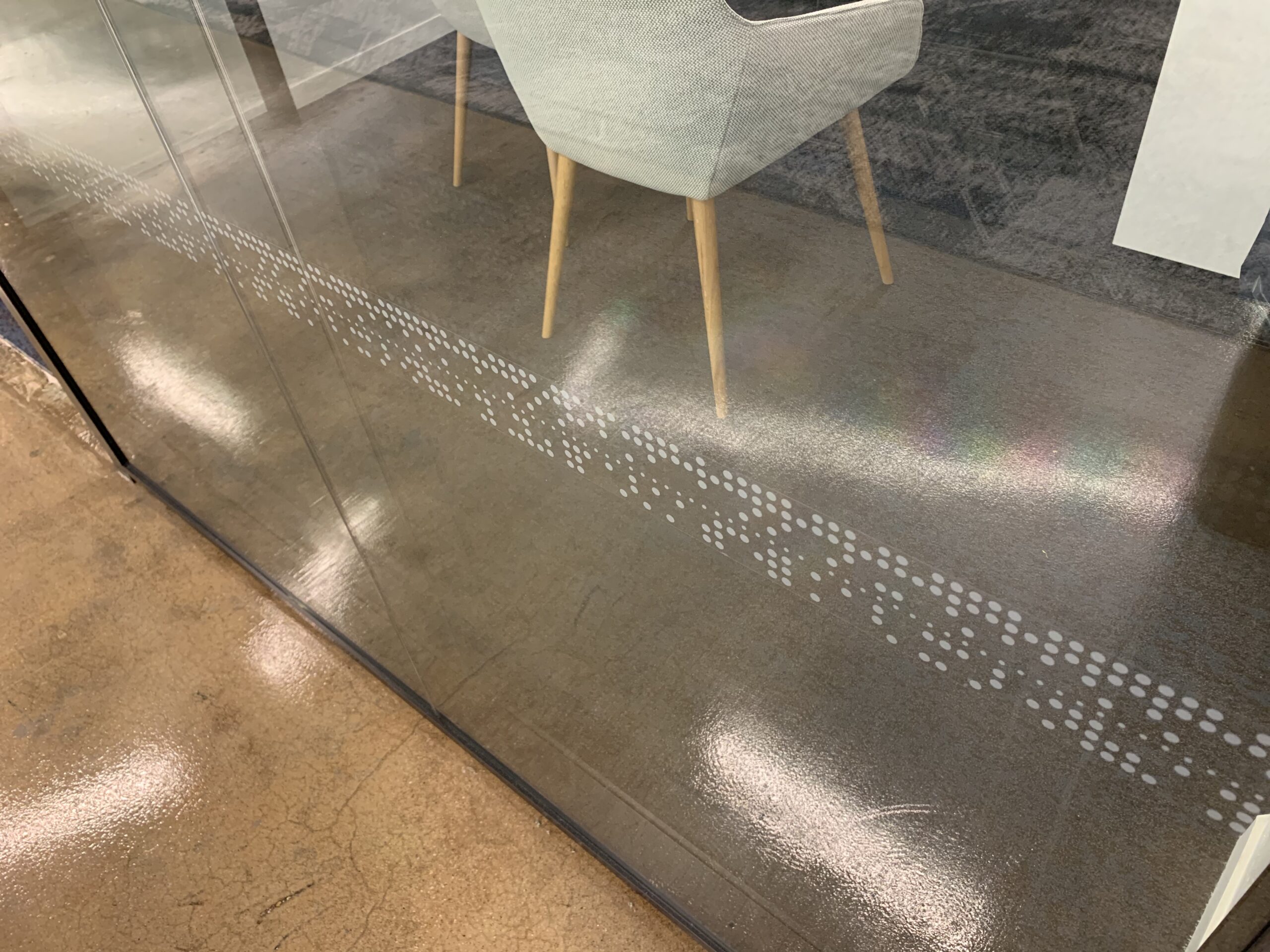
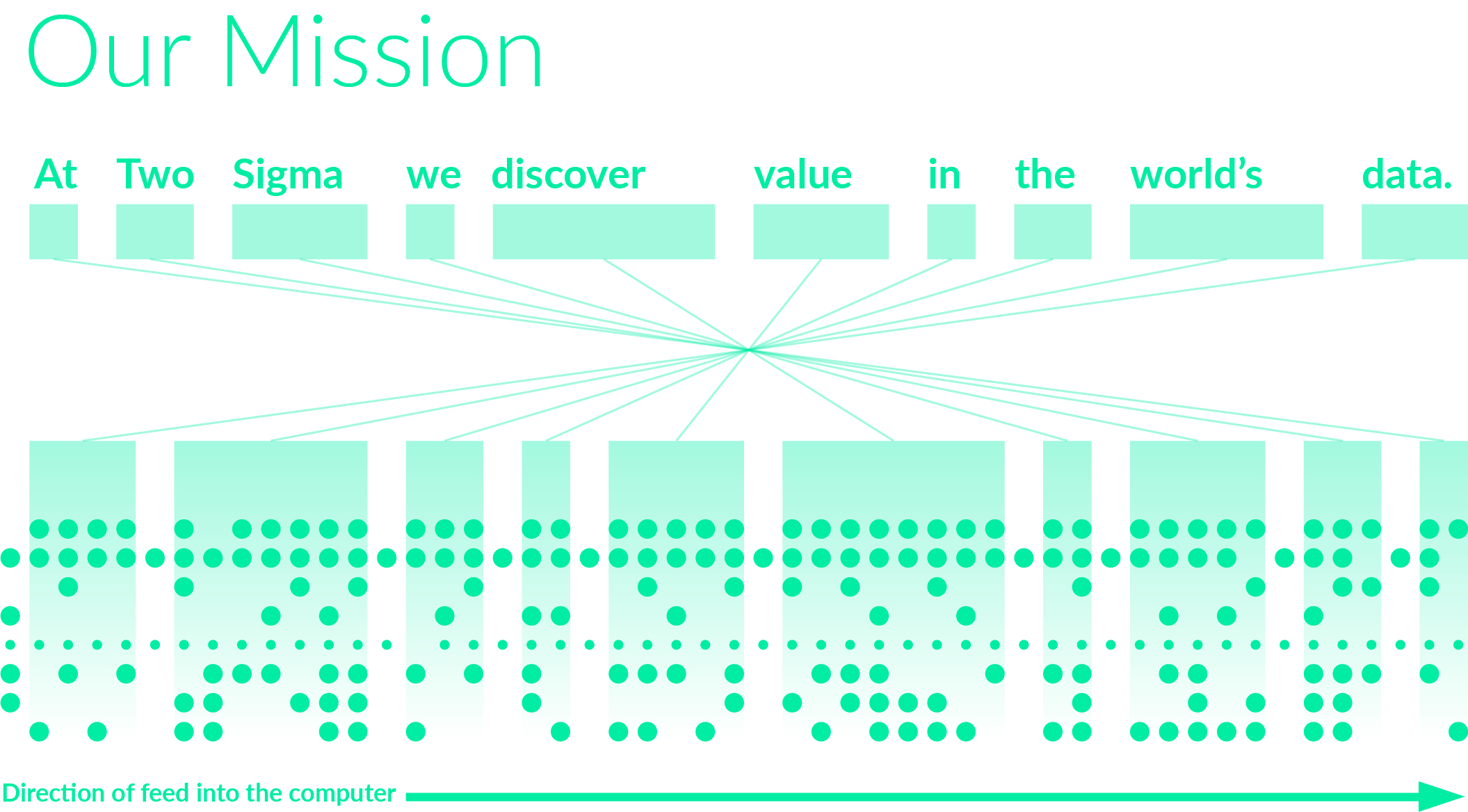
We’ve long invested in events and environments that keep the curious minds of our employees sharp, open, and engaged. Like our Hacker Lab-a gym of the mind, as our Chief AI Innovation Officer once put it. Chess tournaments, code golf, and robotics projects all take place within our office walls, so we’ve endeavored to make those walls themselves a source of intellectual interest. Whether we are memorializing project artifacts and company lore, embedding puzzles and codes in the wallpaper, or telling visual stories that reflect our approach to work, we try to make our office environments repay a closer look.
London
We recently opened our new London office at 7 Devonshire Square. Our Workplace Services and Brand teams took the opportunity to celebrate regional heritage in a very Two Sigma way.

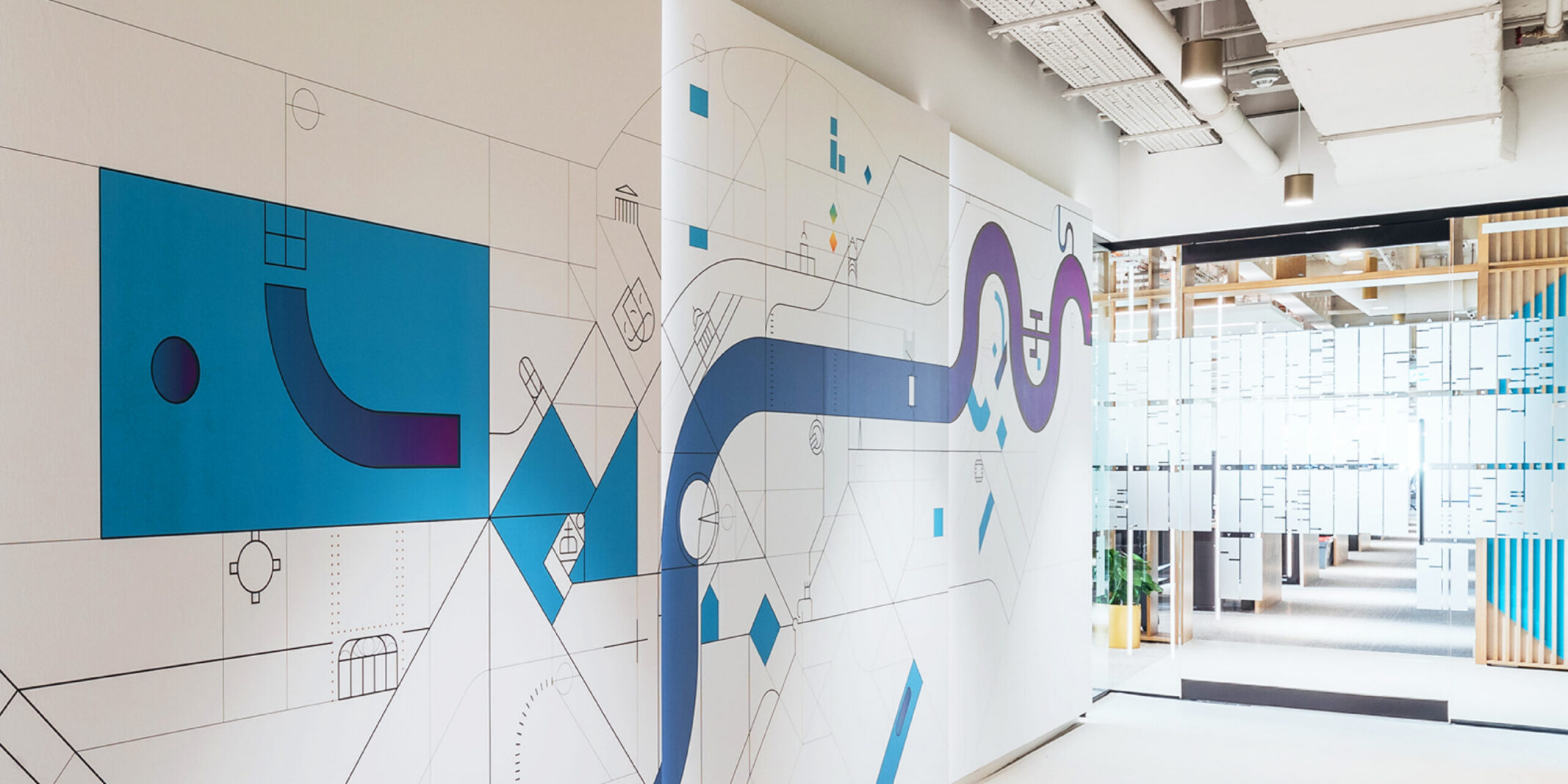
Firstly, we brought something along with us from the previous office: a giant abstract map of London, full of visual references to points of interest. This map spans the elevator lobby wall in our new entrance. But we didn’t simply copy and paste the old map–we’ve updated it to include all three Two Sigma London offices, past and present, with more than two dozen details to pique your curiosity.
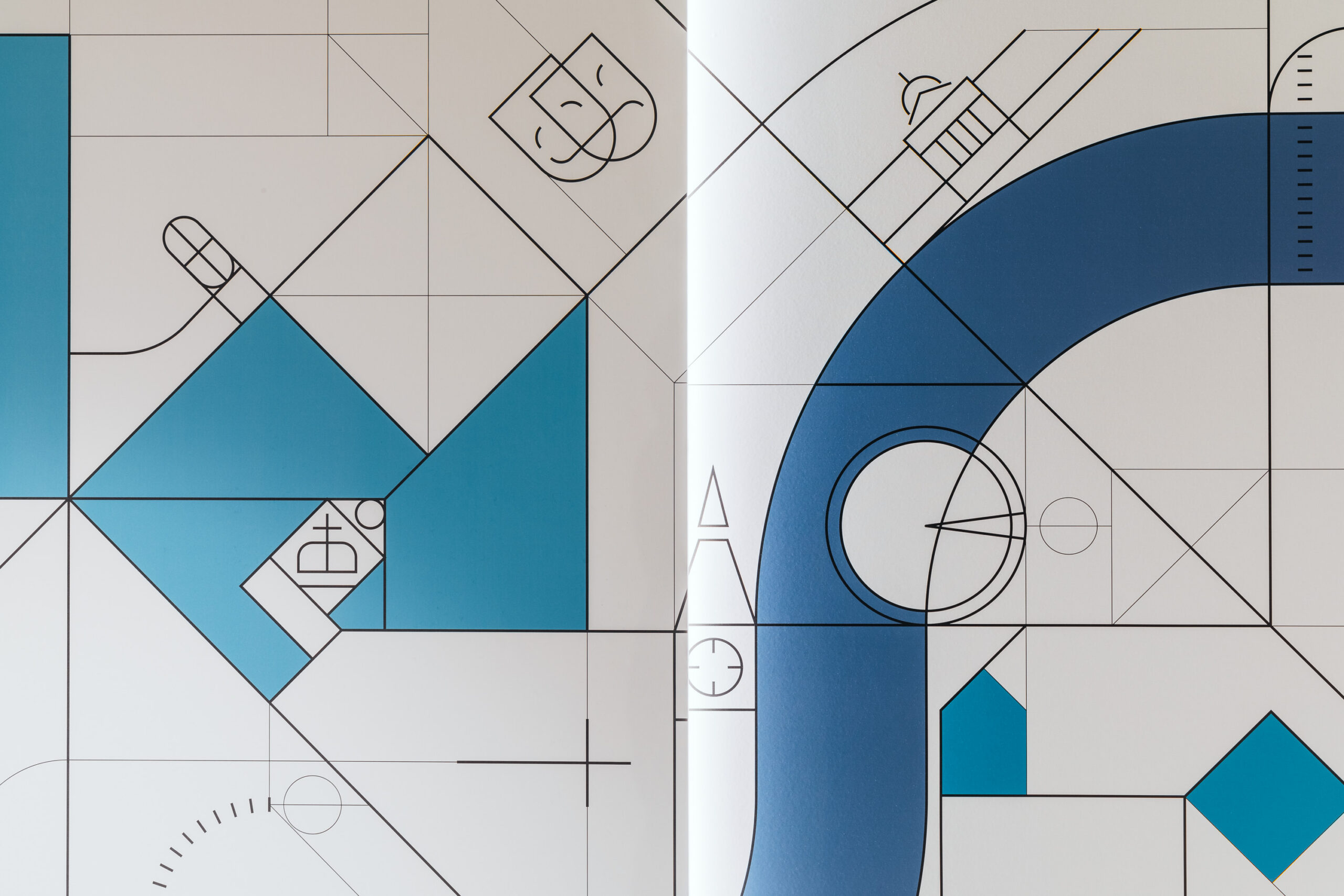
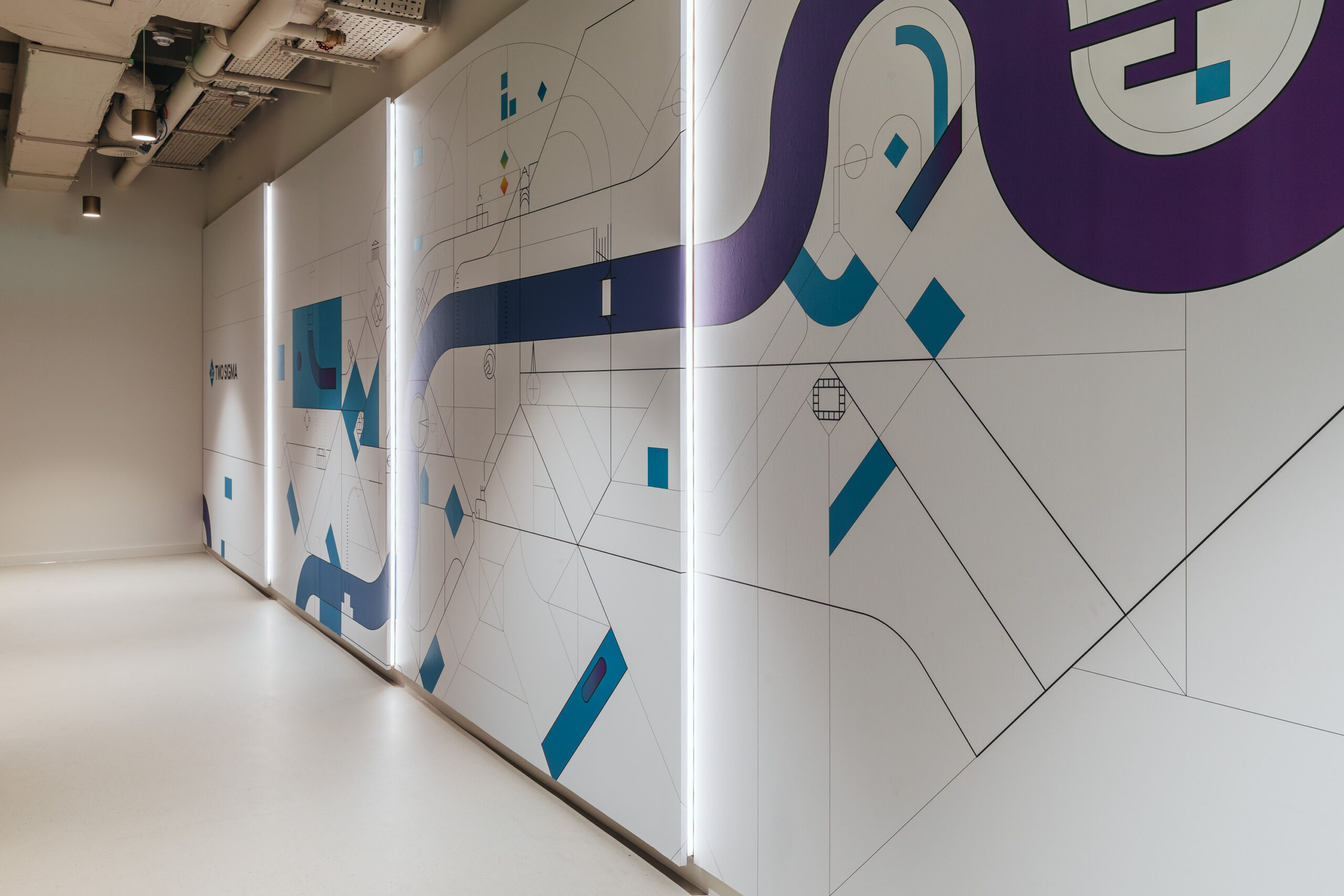
There’s more to celebrate about our English environs. This region has a legendary tradition of scientific discovery. We’ve paid homage to that by encouraging some exploration ourselves. Along the back corridor wall in the London office we have installed a path of discovery–a wallcovering with a meandering line that connects four abstract street maps. Each street map represents an English location of a celebrated scientific breakthrough.
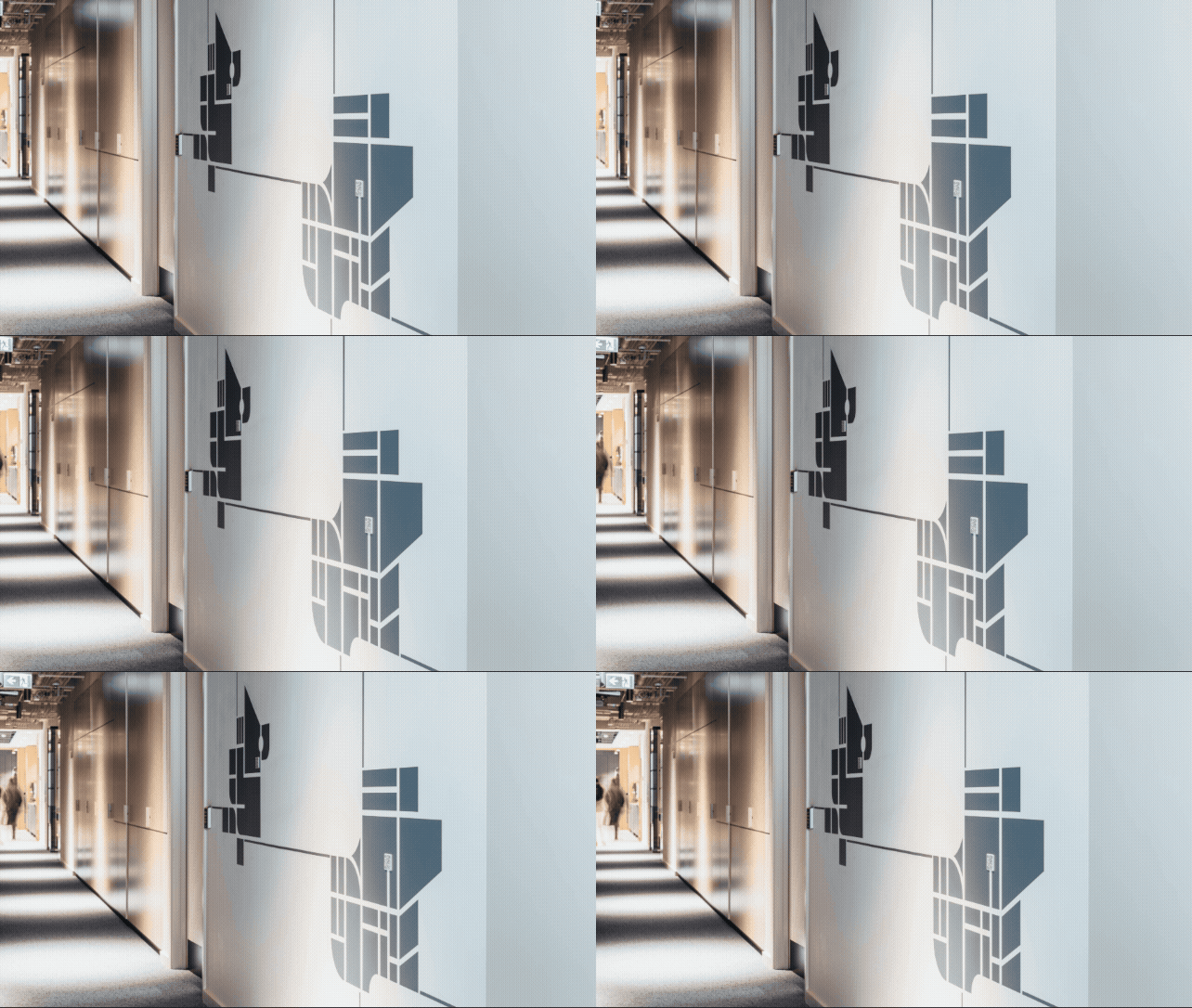
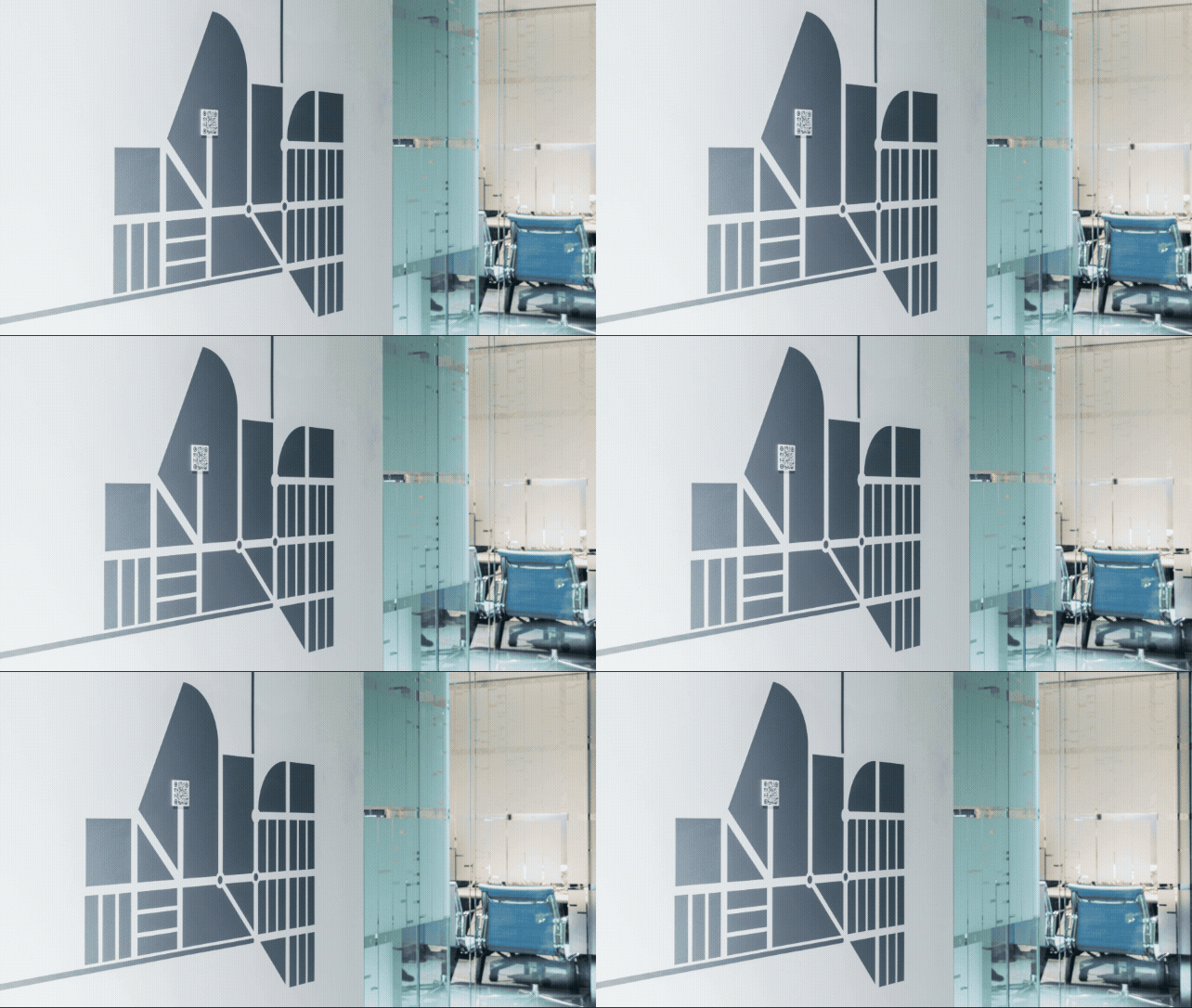
To learn more about these London office designs, please explore our
Hidden Atlas.
New York
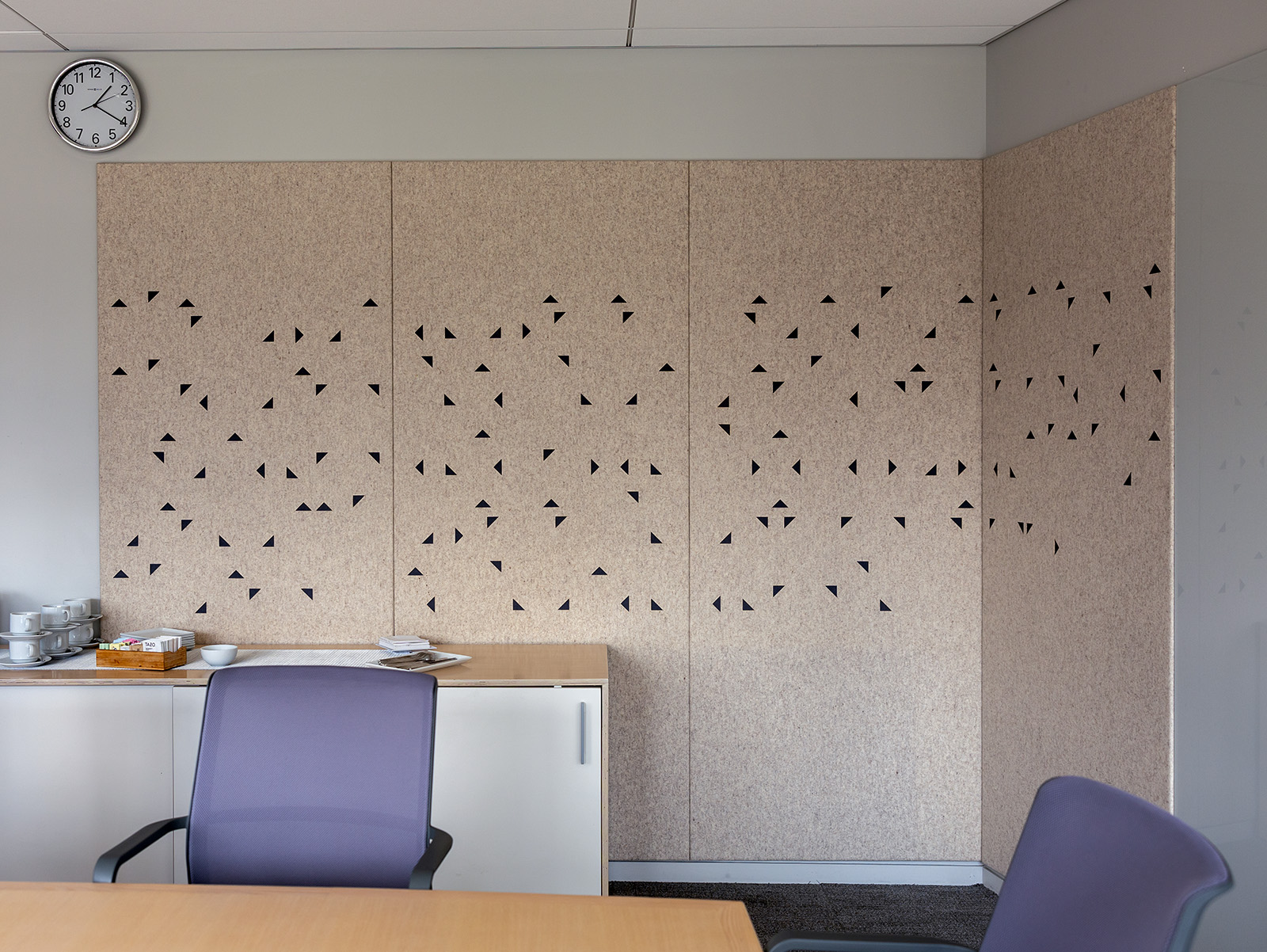
Welcome to our HQ. Imagine you are sitting in one of our conference rooms, and you happen to notice a pattern of triangles across the wall paneling. “Are those random?”, you might wonder. No, no they’re not. In fact these ubiquitous wall panels encode the text of historic company principles, using an abstracted form of semaphore. Years ago, not long after installing these coded panels, a curious email bounced around until it found me in the Marketing department. An employee, having discovered and decrypted these semaphore messages, had emailed one of our cofounders, asking with incredulity “Are there puzzles all over the place like this?” Yes, yes there are.
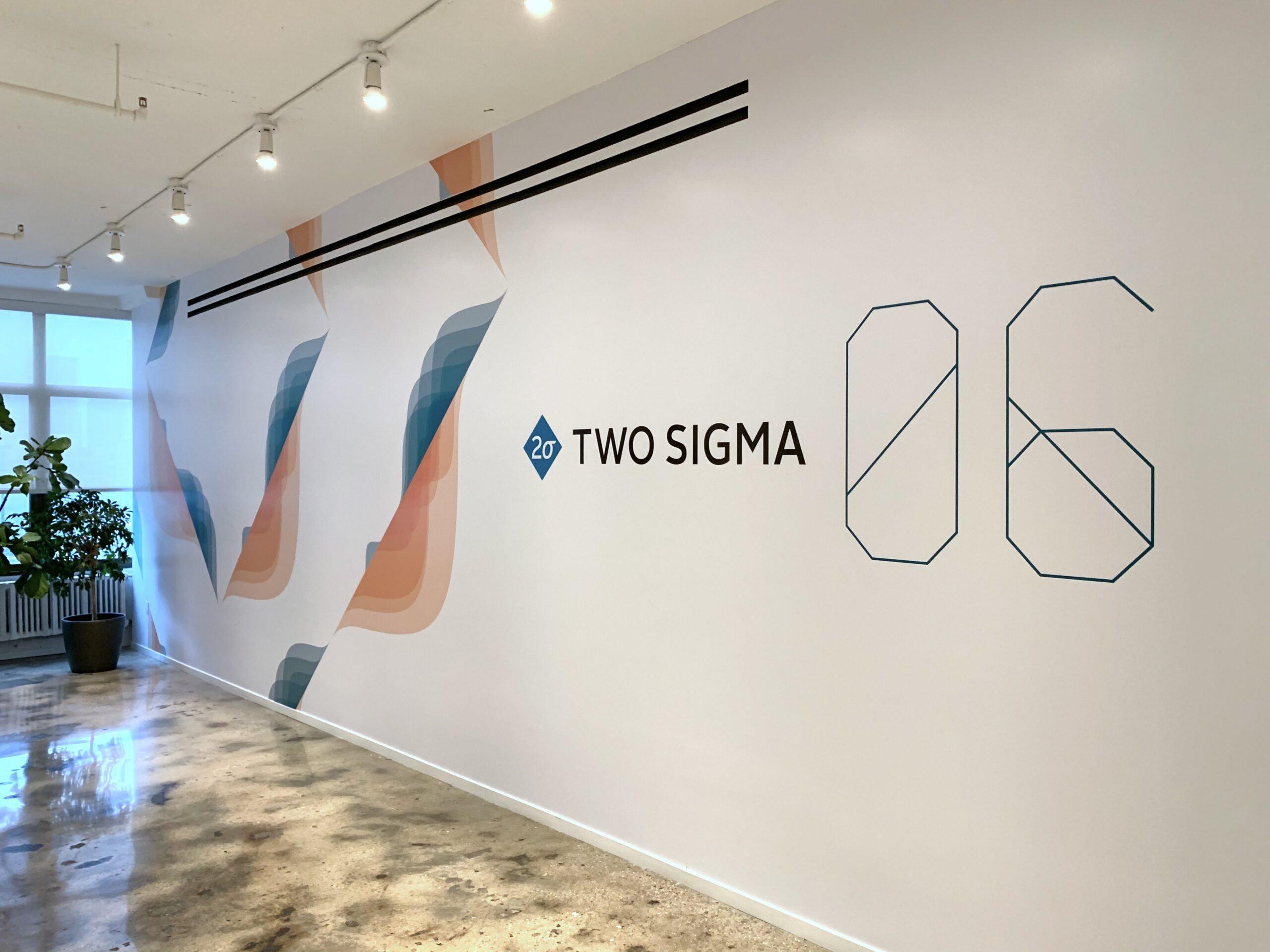
Let’s look around HQ a bit more. Here’s a giant data visualization on one of our elevator lobby walls. It’s been gussied up into a decorative wall pattern, but it’s data nonetheless. What you see is a series of waveforms that tell a story parallel to Two Sigma’s – one of pioneering quantitative methods in a new field.
If you’ve watched Moneyball, you know the story. In the early 2000s, sabermetrics and similar techniques revolutionized baseball by applying a quantitative, statistical approach to improving teams’ performance. The pattern on this wall represents the win-loss percentage, relative to payroll-based expectations (the straight line), of all major league baseball team-seasons from 2000 to 2014. The largest waveform belongs to the Oakland Athletics—an outperforming pioneer in applied statistical analysis.
Two Sigma folk are a cut above. Elite. Average puzzles are a lark. So if these examples have been a touch mundane, a mite obvious, stick with me. Let me see if I can catch your interest with one more hidden code. It’s a bit extra, borderline abstruse, perhaps a mad folly.
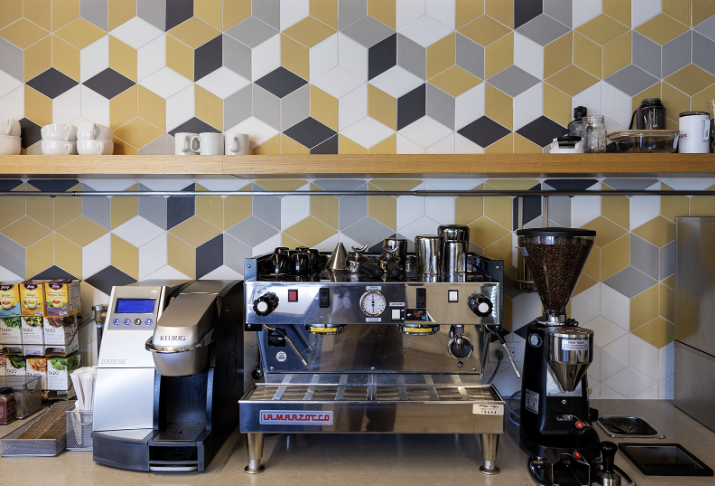
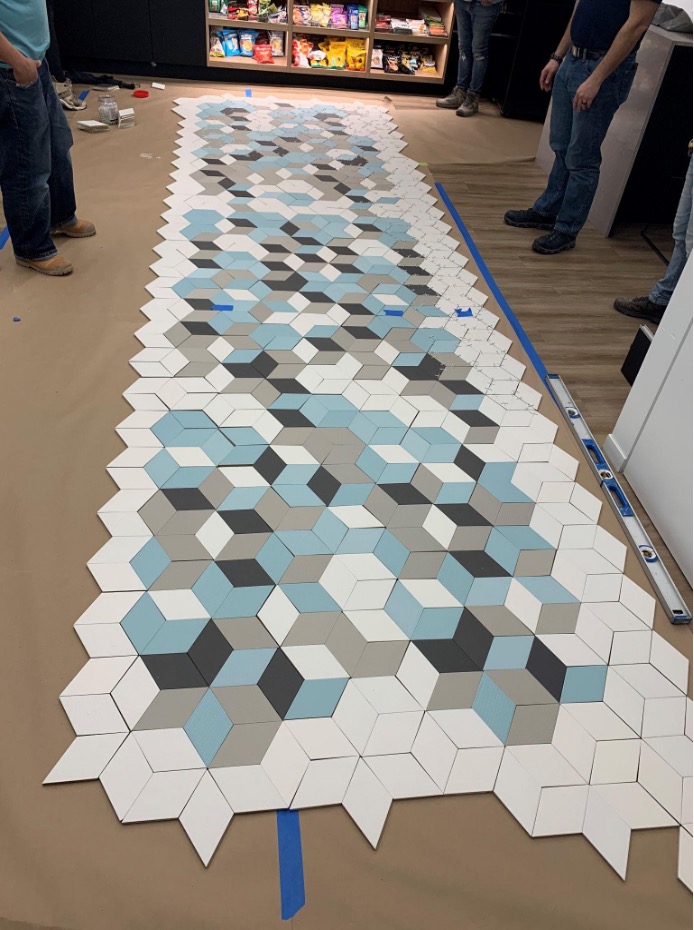
Behold one of our pantry walls. Take a look at the geometric tiles. What do you see? Do you notice how the diamond shaped tiles arrange themselves in hexagonal groups of three? Do you notice how certain groupings of three repeat themselves across the wall? Do you recall how nature sometimes encodes information using a sort of “alphabet” composed of groupings of three? Do mRNA nucleotides come to mind?
Alright, for some of you that’s enough – go figure it out. For the rest of you, let’s indulge in spoilers.
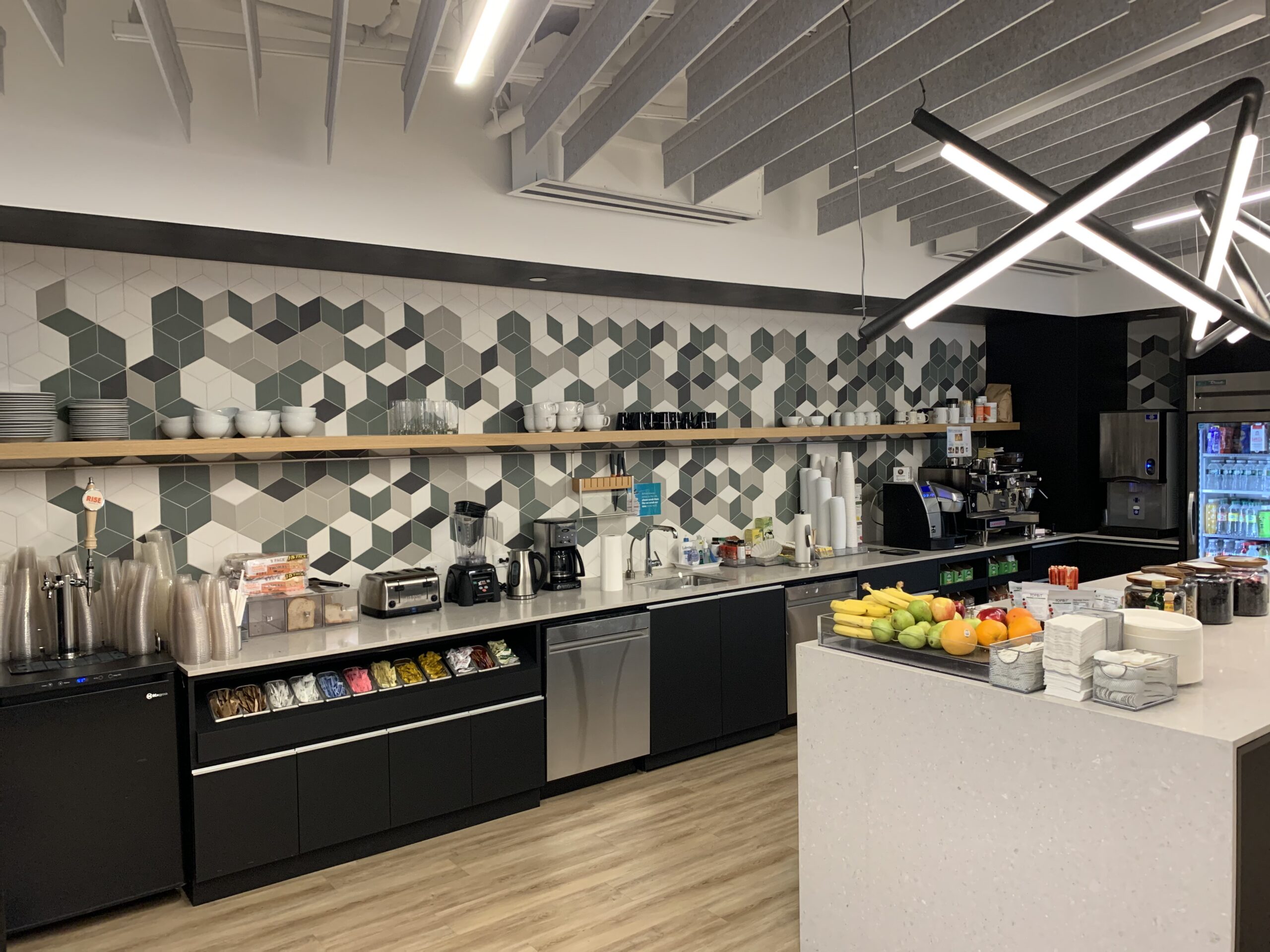
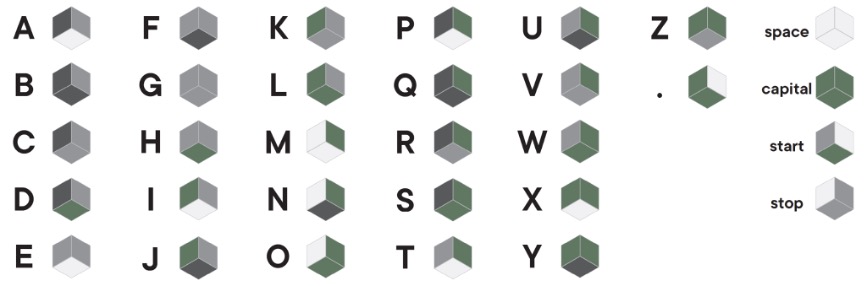
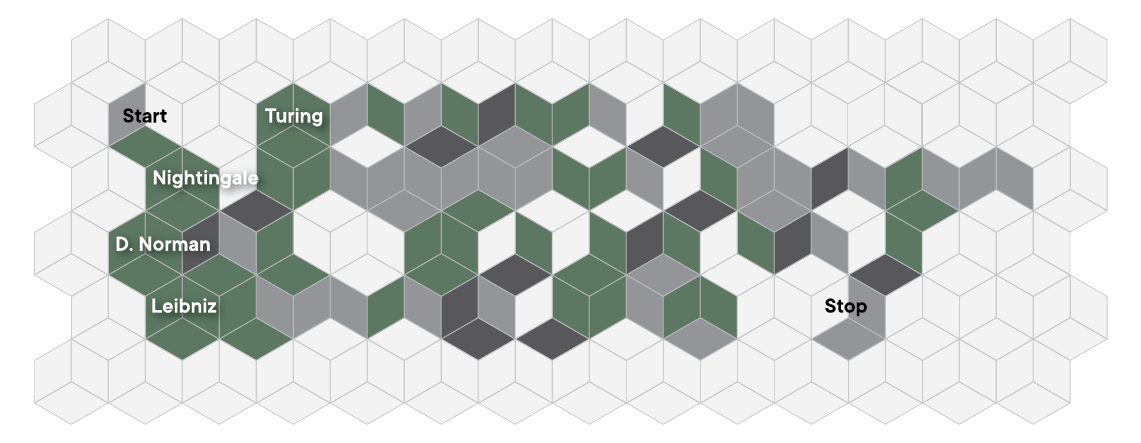
What you are looking at when you stare at the pantry backsplash tiles are lists of legendary names. Names of mathematicians, physicists, computer scientists, economists, and more. Brahmagupta is there. Hopper, Guo, and Fama too. Each letter of their names is represented by a hexagonal grouping of three tiles. Each grouping, in turn, represents an mRNA codon (UUG, CAU, etc.) with a color for each possible nucleotide (e.g. yellow=G, gray=A, white=U, black=C). Each codon corresponds to an English letter or glyph. Here’s an example:
Curious minds never stop, so neither do we. There are many more fun details to share about our office environments. Check back here for a series of bite size posts discussing more features from all our global office locations. In the meantime, happy code hunting!