
The Hidden Atlas
- Welcome
- You've accessed Two Sigma’s Hidden Atlas—a portal to the intricate puzzles, scientific oddities, and subtle patterns within our offices. Just as we work together to find insights in data, the Hidden Atlas invites the curious to perceive order amid complexity.
Filter
-
Welcome: You've accessed Two Sigma’s Hidden Atlas—a portal to the intricate puzzles, scientific oddities, and subtle patterns within our offices. Just as we work together to find insights in data, the Hidden Atlas invites the curious to perceive order amid complexity.
Binary Code Wall (NYC 100.7)
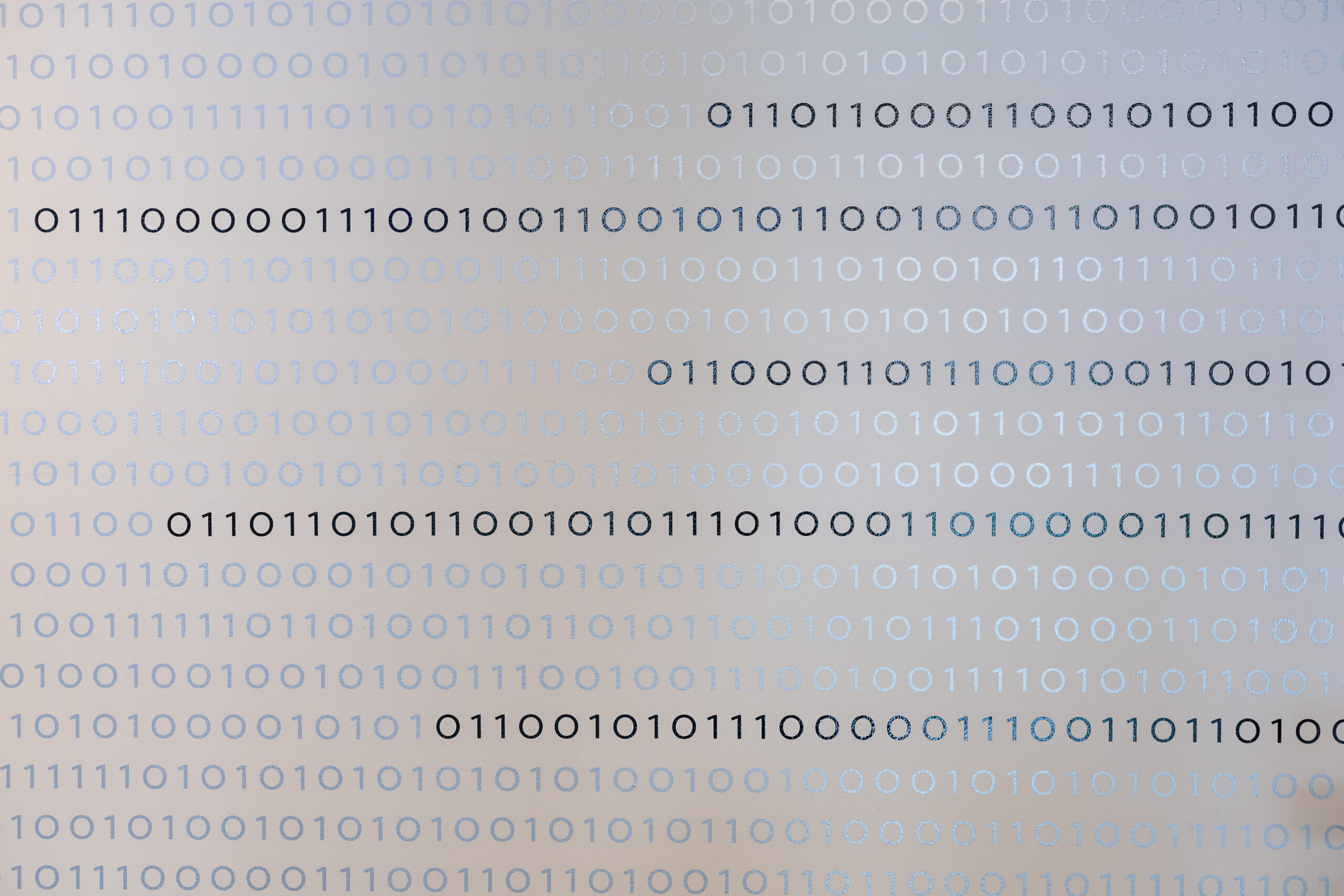
One of the oldest curiosities in our office is the wall of binary code on the seventh floor of 100 AOA. It provided early inspiration for many puzzles, codes, and Easter eggs throughout our office designs. Can you find and decode it?
Elevator Lobby Graphics (NYC 100.12)
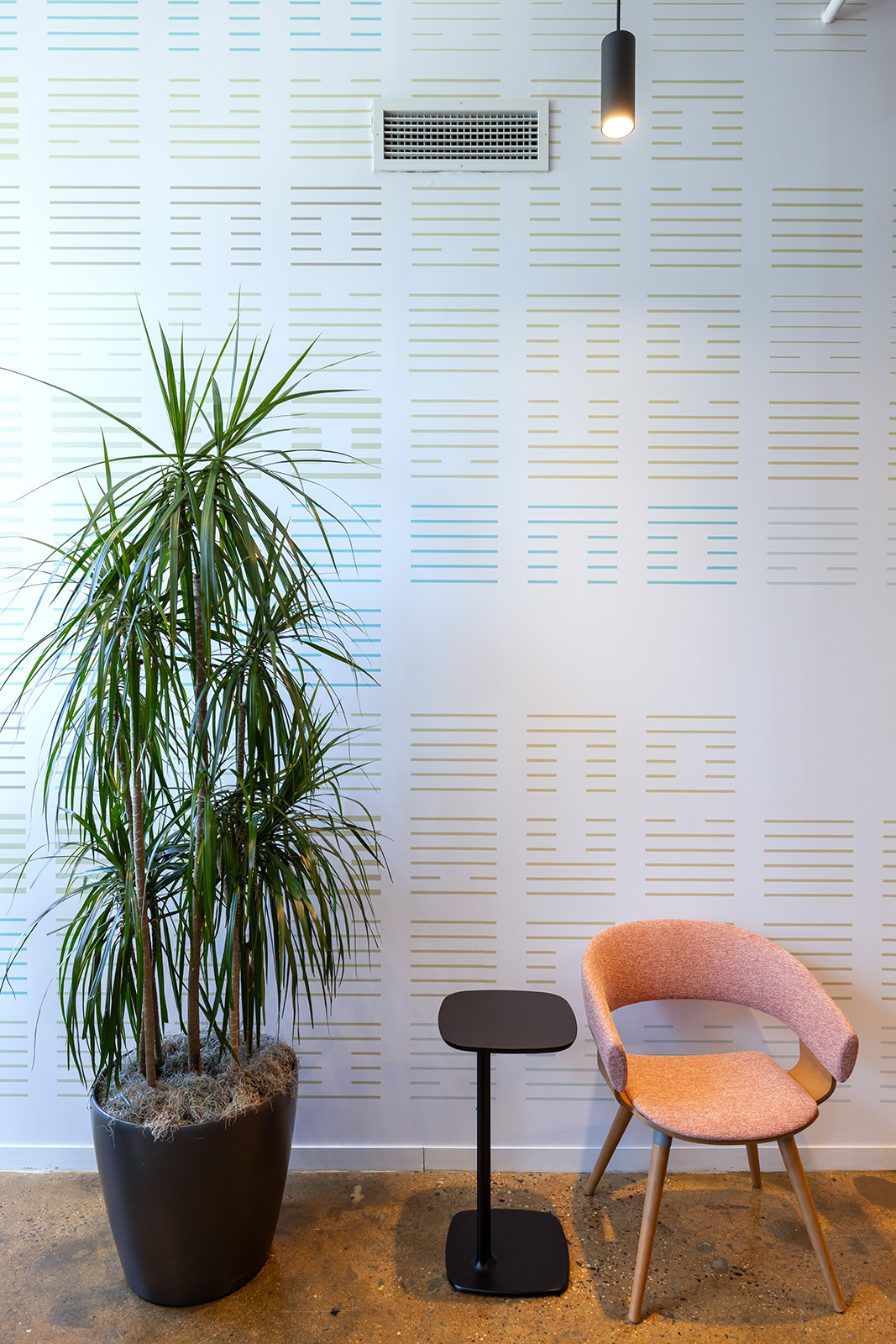
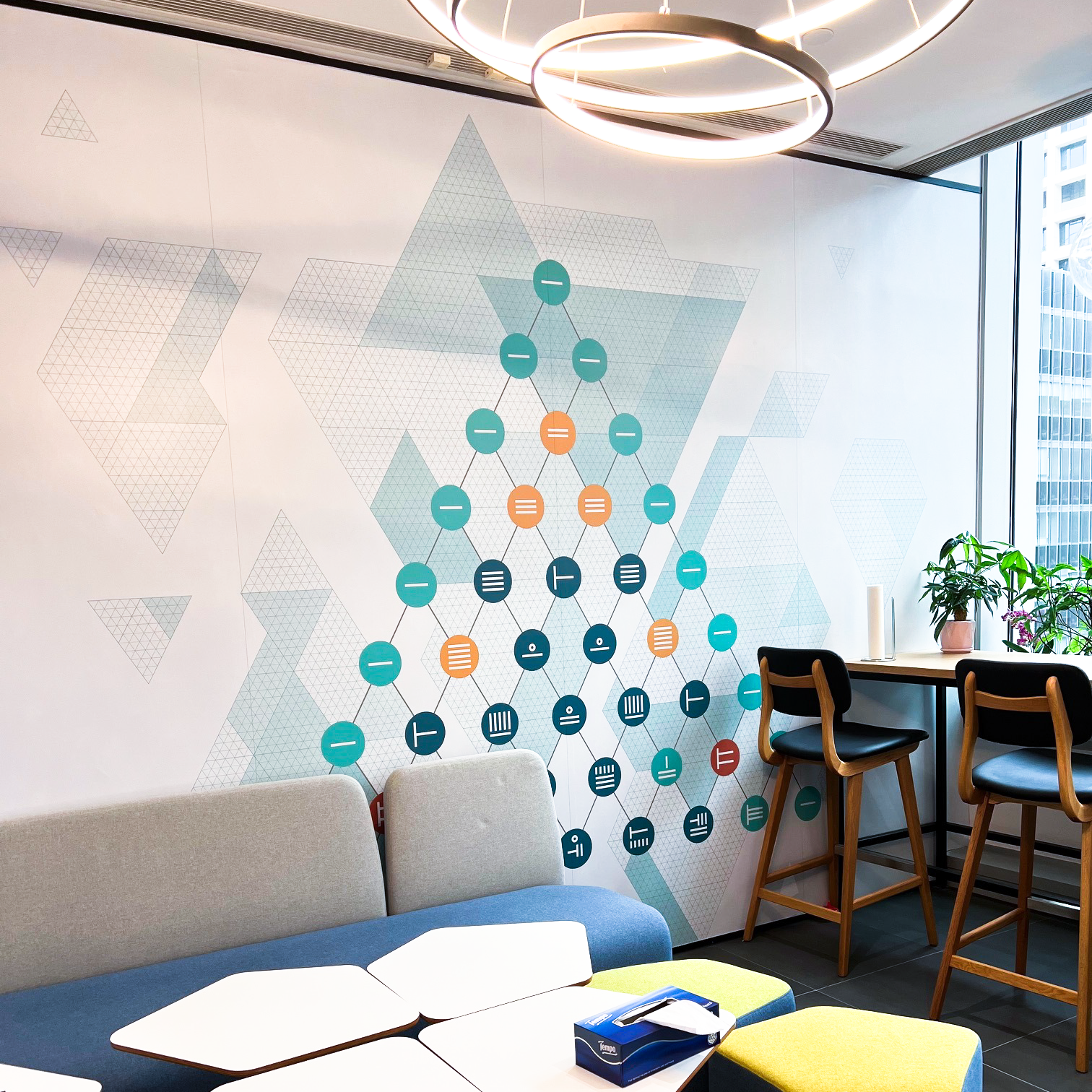
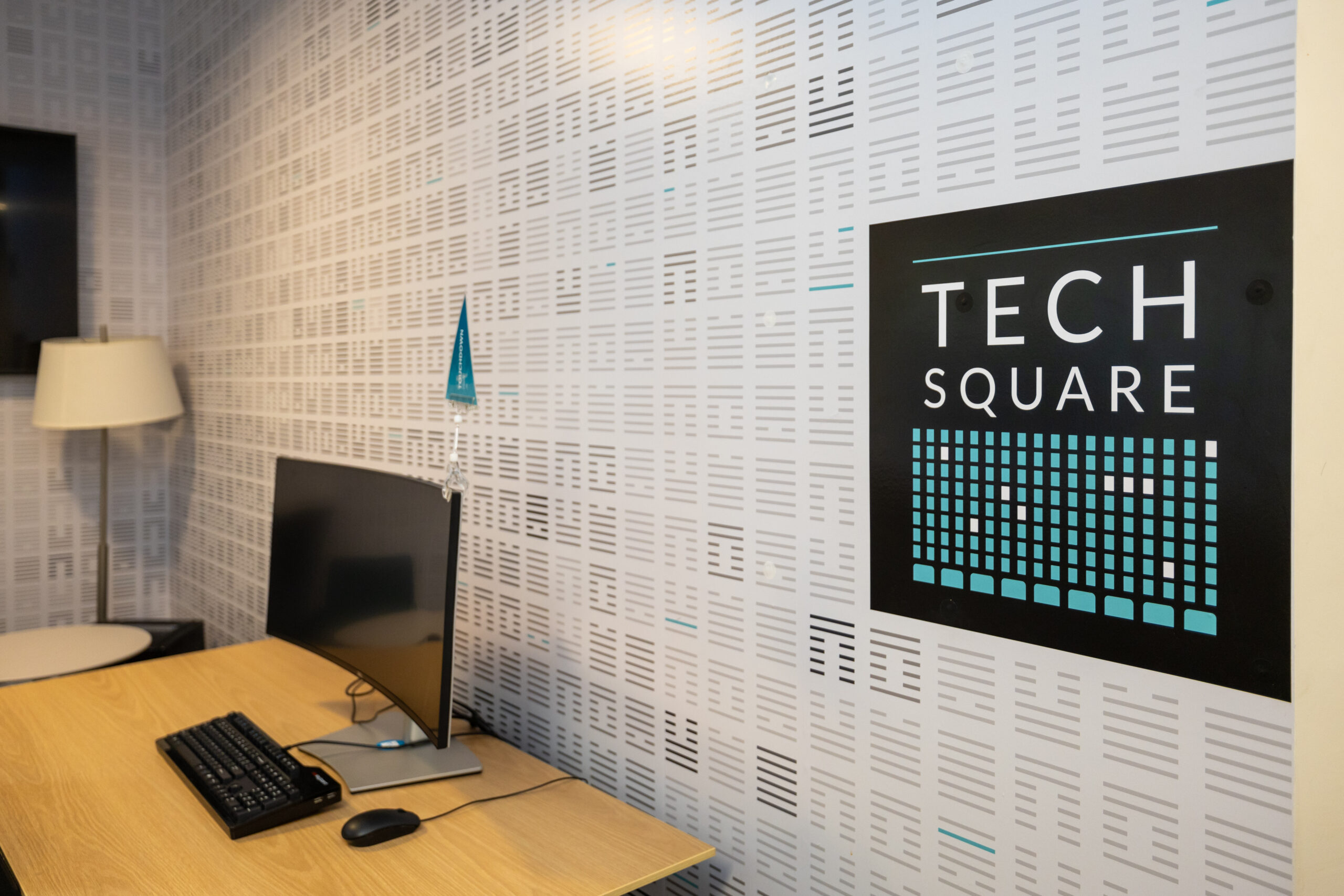
These wallcovering graphics are based on one of our historical principles: “We keep moving forward. Deliver epsilon, dream omega.” The pattern has a backstory: A repeating sequence of six hexagrams from the I Ching inspired this pattern. Together, they signify the steps of an iterative process: Concording people, pushing upward, breaking through, strong creative action, contemplating, and augmenting. This is how we solve complex problems. Working together, we try new ideas, move quickly to discover what works and what doesn’t, and keep building on what we’ve learned.
Giant Floor Chess (NYC 101.23)
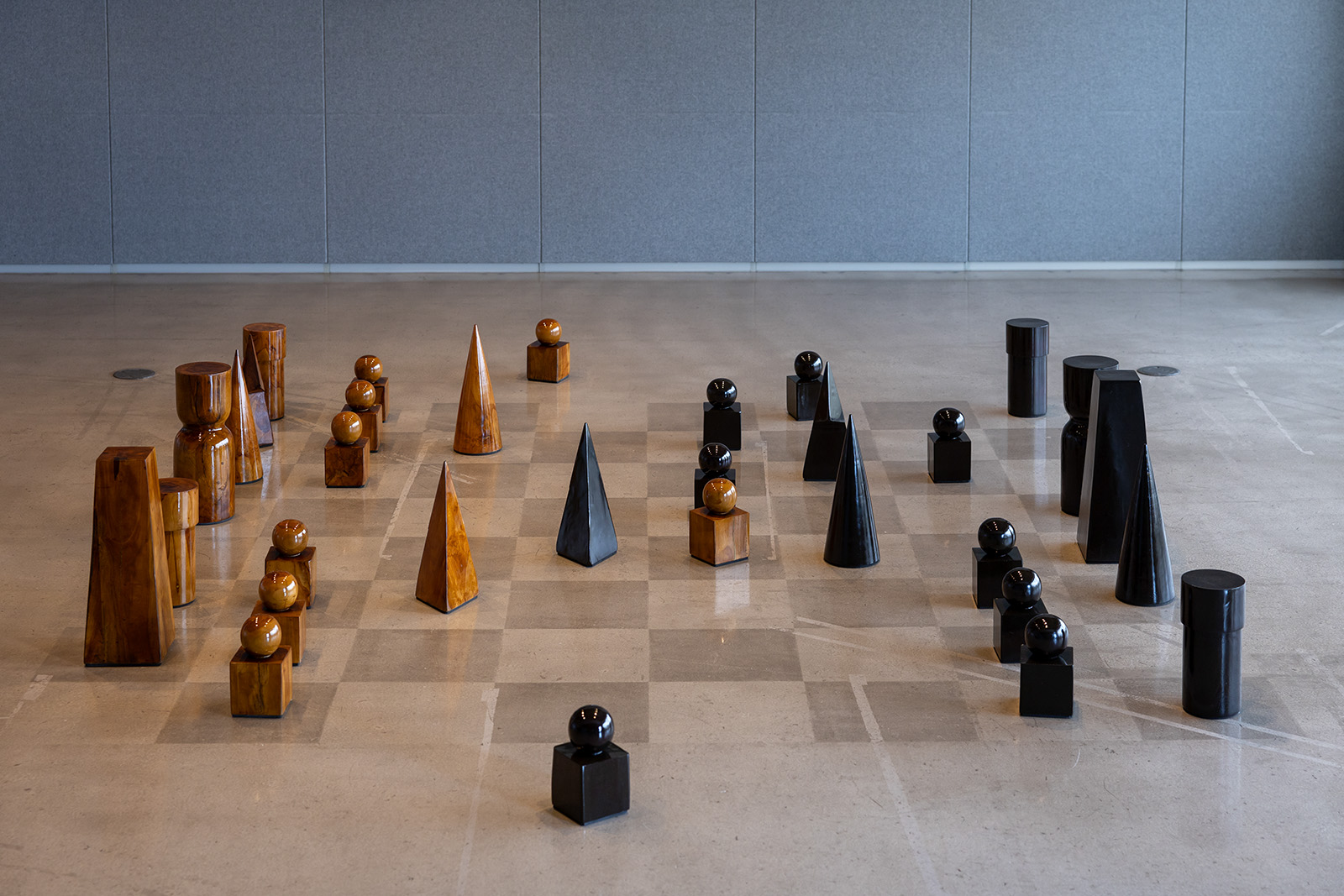
Have you ever noticed a checkered pattern on the floor of the Quad? It’s actually a giant chessboard, with a set of giant pieces in the wooden cabinet nearby. If you are interested in playing giant chess and need help finding the pieces, ask Reception at the entrance of the 23rd floor for assistance.
Entry Wall Graphics (Tokyo)
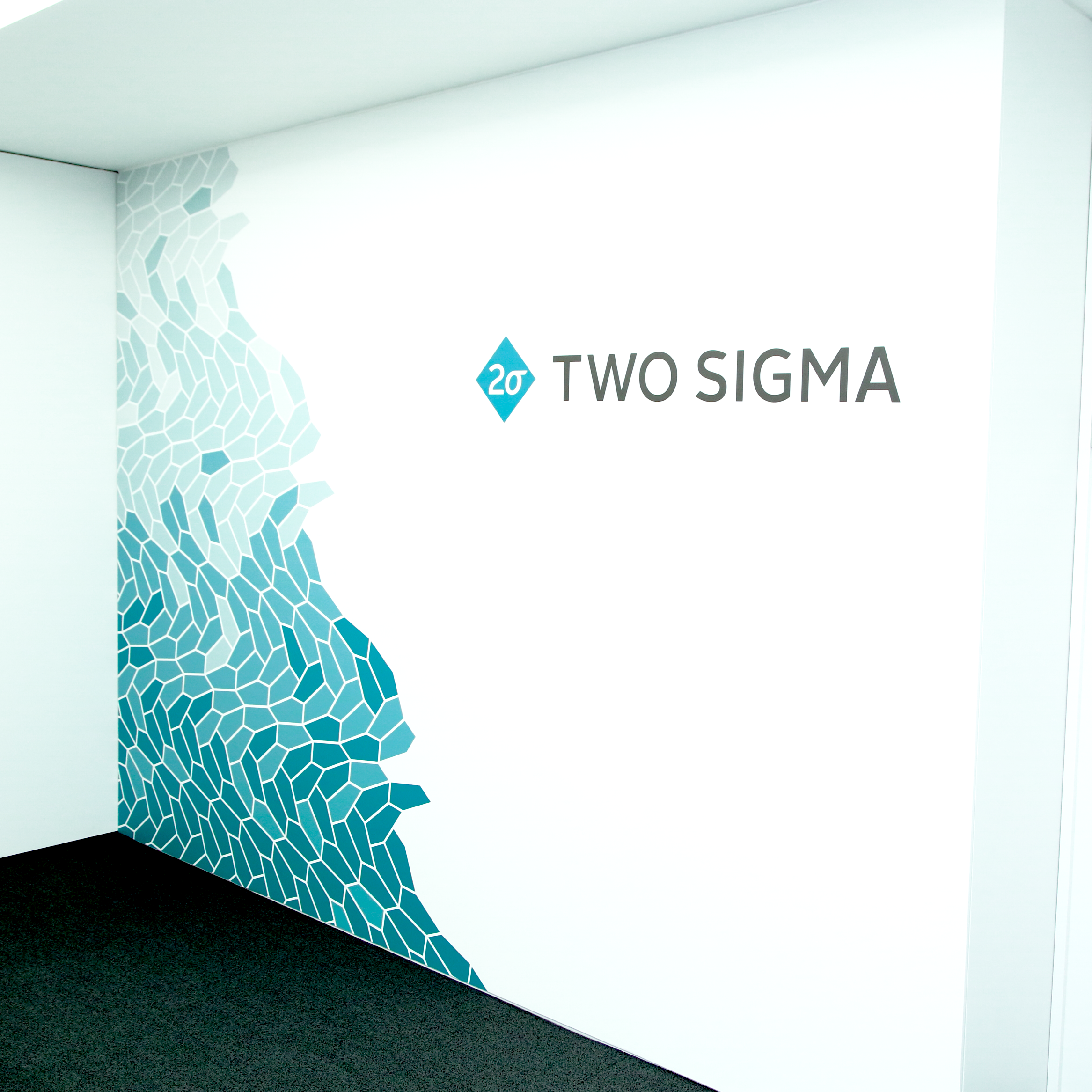
These wallcovering graphics are based on one of our historical principles: “We are scientists. Always be discovering.” The pattern has a backstory: How many different kinds of convex pentagons exist that can tile a plane? For decades, only 14 types of these elusive, “tessellating” pentagons were known. But in 2015, a team of mathematicians using an algorithm and a cluster of computers found a 15th type—the one shown in this pattern. To us, it’s more than just an elegant shape. It’s a symbol of discovery.


Electric Sheep Digital Art (Houston Reception)
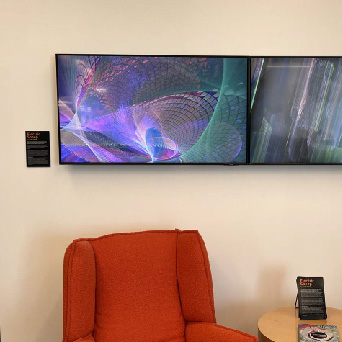
Electric Sheep is a collaborative abstract artwork conceived by former Two Sigma employee Scott Draves. It’s run on computers all over the world. Upvoted animations reproduce according to a genetic algorithm with mutation and cross-over, ever evolving to please their global audience.
IBM 83 Card Sorter (NYC 100.15)
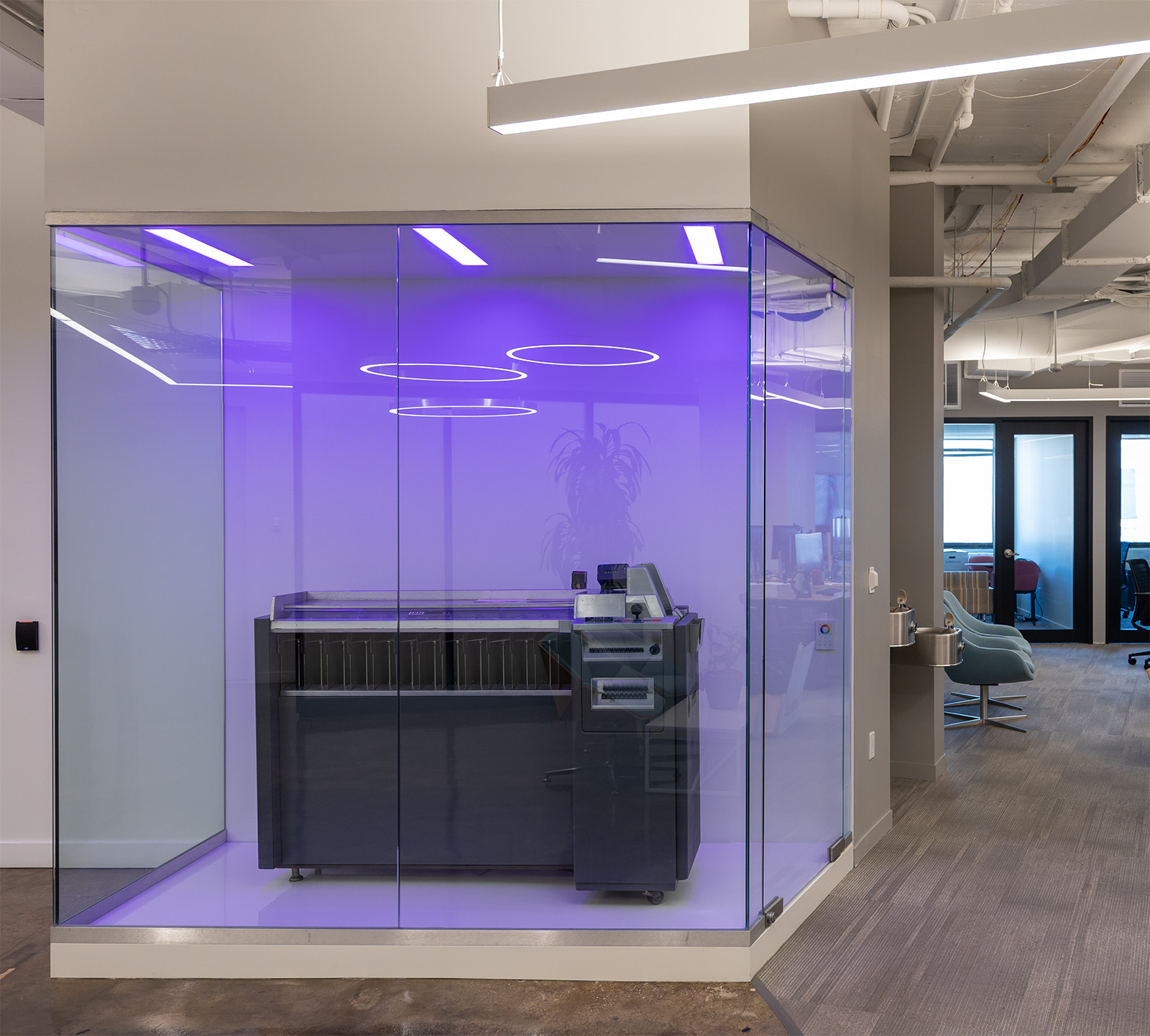
This is a vintage IBM 83 Card Sorter. It was rescued and cleaned up by Two Sigma employee Trammel Hudson and others. Sorting punched cards was a major task for data processing facilities in the 1950s, before the advent of modern computing. The IBM 83 could sort punched cards into 13 different pockets – 12 pockets associated with 12 rows on the punch cards, plus 1 row for “reject” cards.
Employee-Designed Board Games (NYC 101.23)
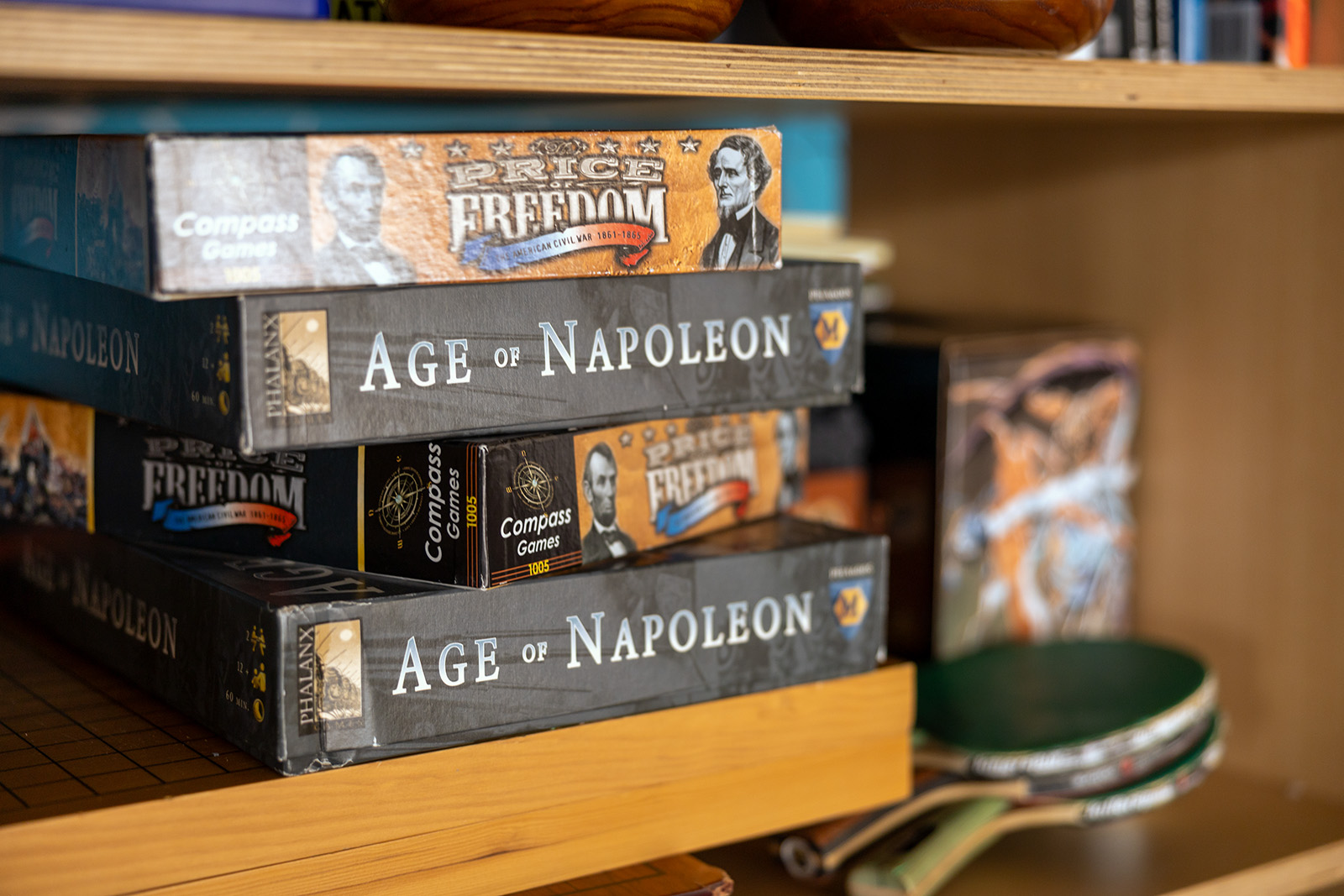
You might know that Two Sigma employees love board games. But did you know a former employee actually designs and publishes them? Renaud Verlaque specializes in strategy games based on historical military conflicts. Keep an eye out for these games on the shelves in the Quad!
Reception Wall Graphic (London)
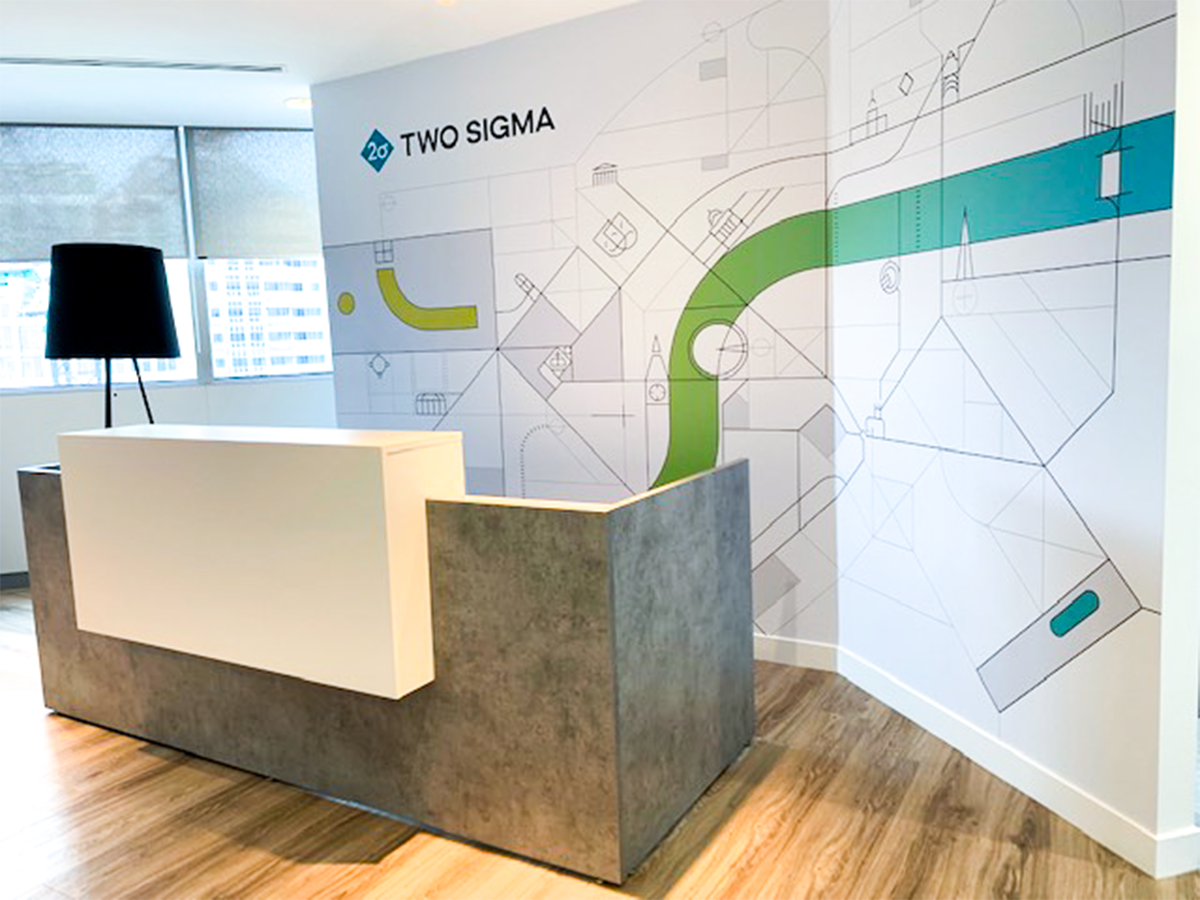
Astute visitors might notice that the wallcovering behind the London reception desk is an abstracted map of London. But locals and anglophiles will recognize a number of landmarks worked into the illustration, including The Serpentine, The Globe Theatre, and the location of the Two Sigma office. How many landmarks can you name?
Meeting Room Wall Panels (NYC 100.10)
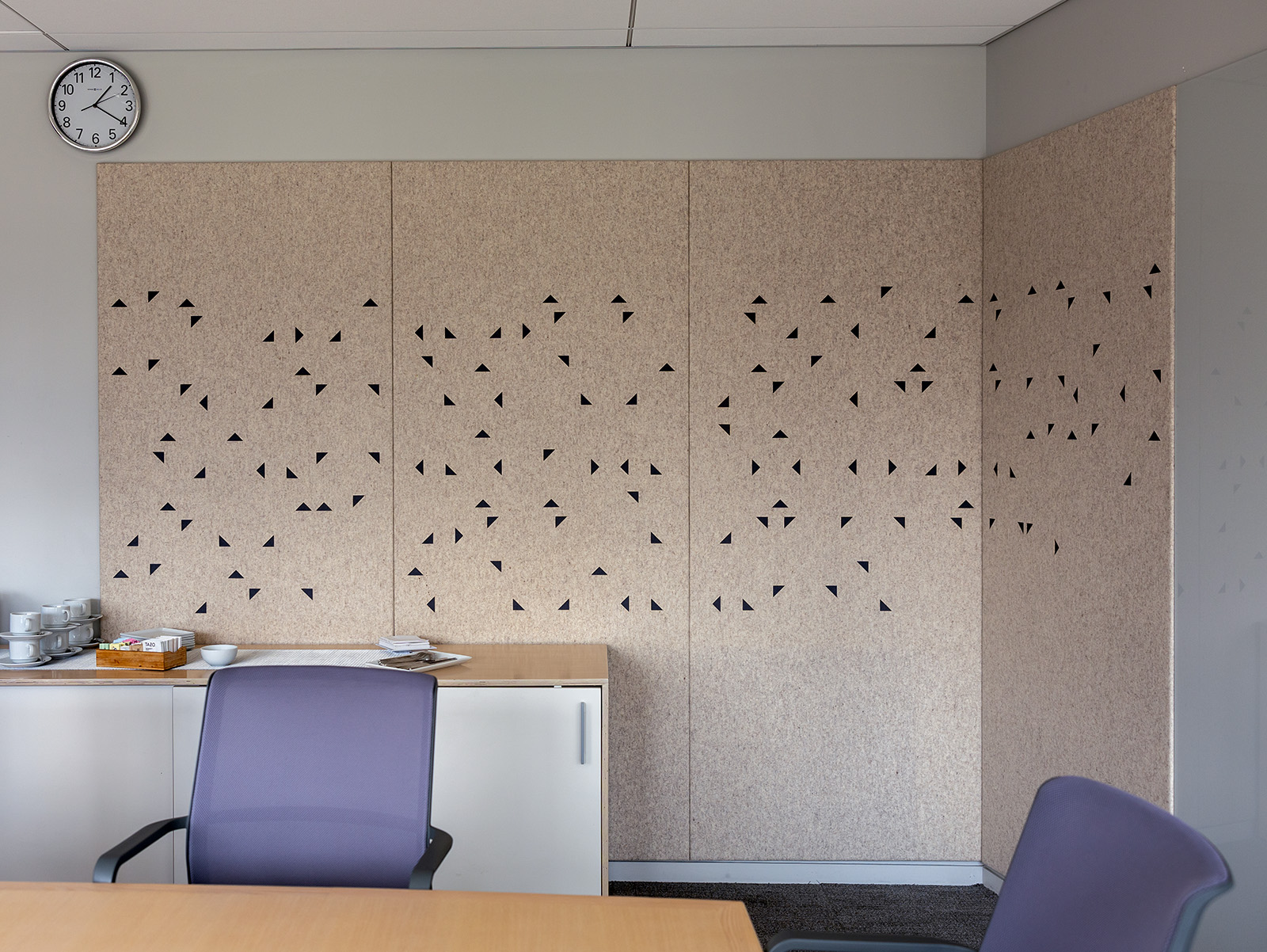
These felt wall panels feature a visual code that has been deciphered by a few Two Sigma employees…can you figure it out too? Each wall panel contains the text of one of Two Sigma’s historic principles.

Elevator Lobby Graphics (NYC 100.5)

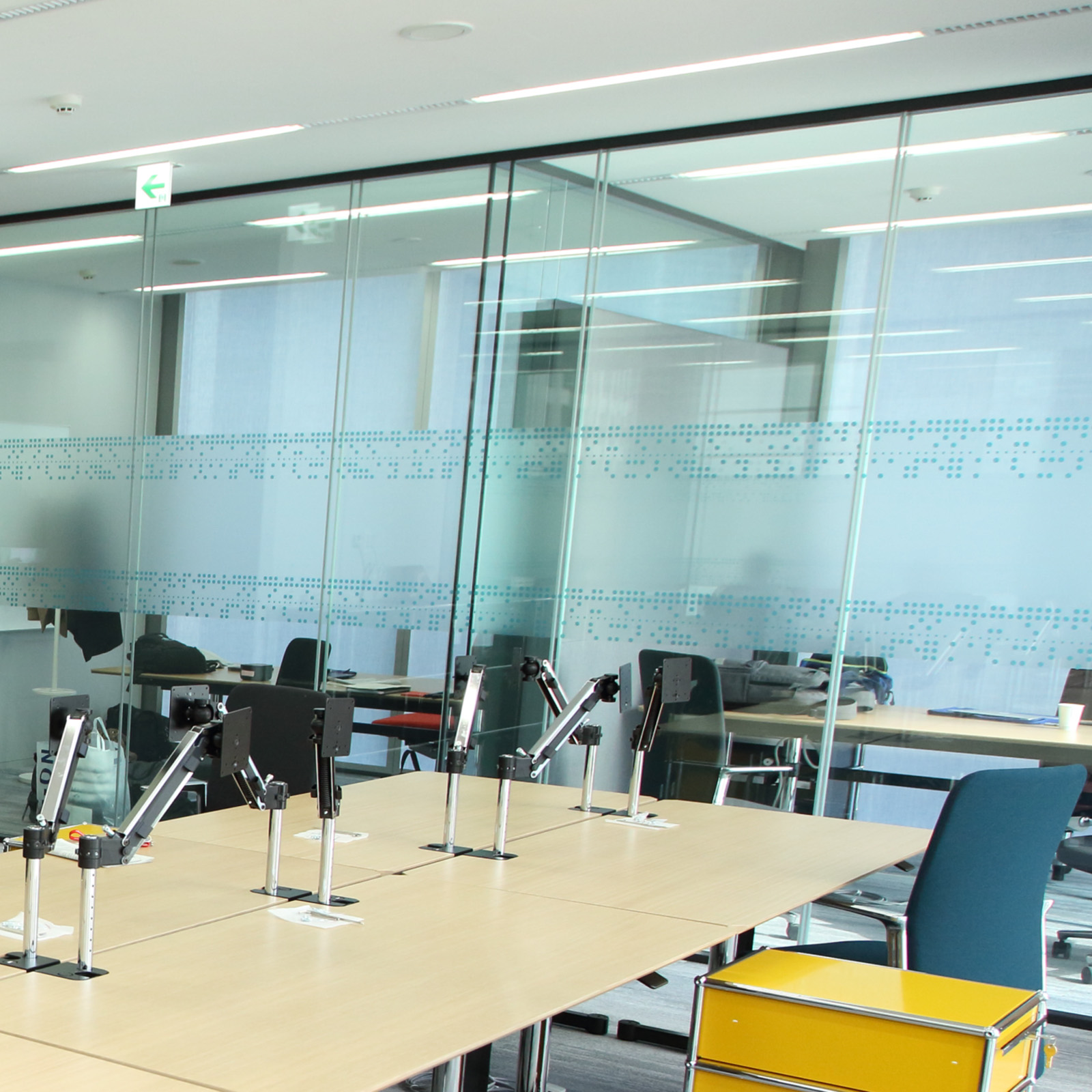
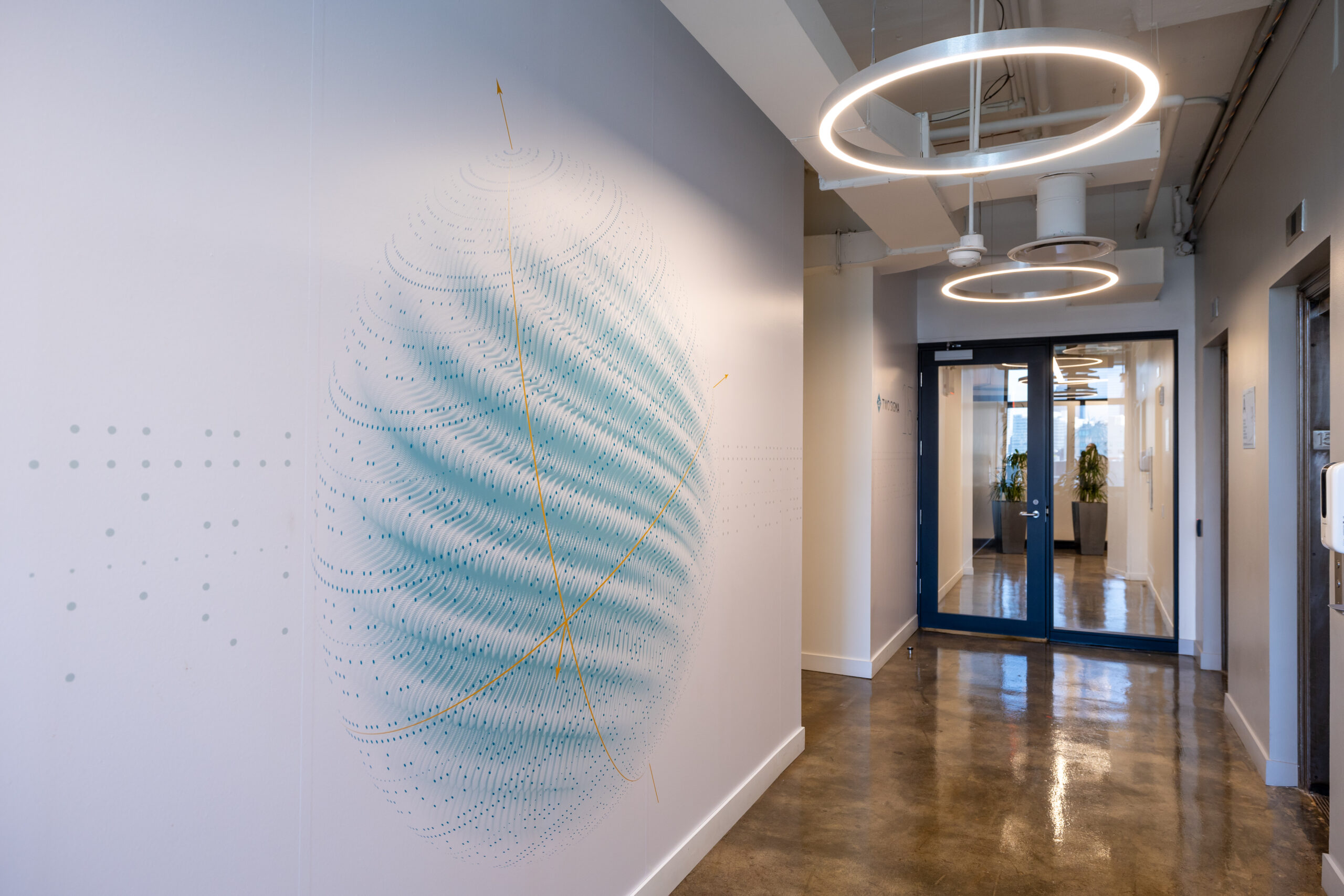
These wallcovering graphics are based on one of our historical principles: “Our work matters. Connect to the big picture.” The pattern has a backstory: Discovering relationships and meaning in information: that’s what data science is all about. And being mindful of how we fit into the larger community remains one of Two Sigma’s core values. Encapsulating both of these themes, this pattern evokes a favorite Two Sigma mantra: It’s all connected. The line lengths and dot sizes in this pattern relate to one another according to the Fibonacci sequence, a numerical pattern that manifests in many fields, from biology and architecture to finance, art, and more.
Vintage Keyboard Display (NYC 100.16)
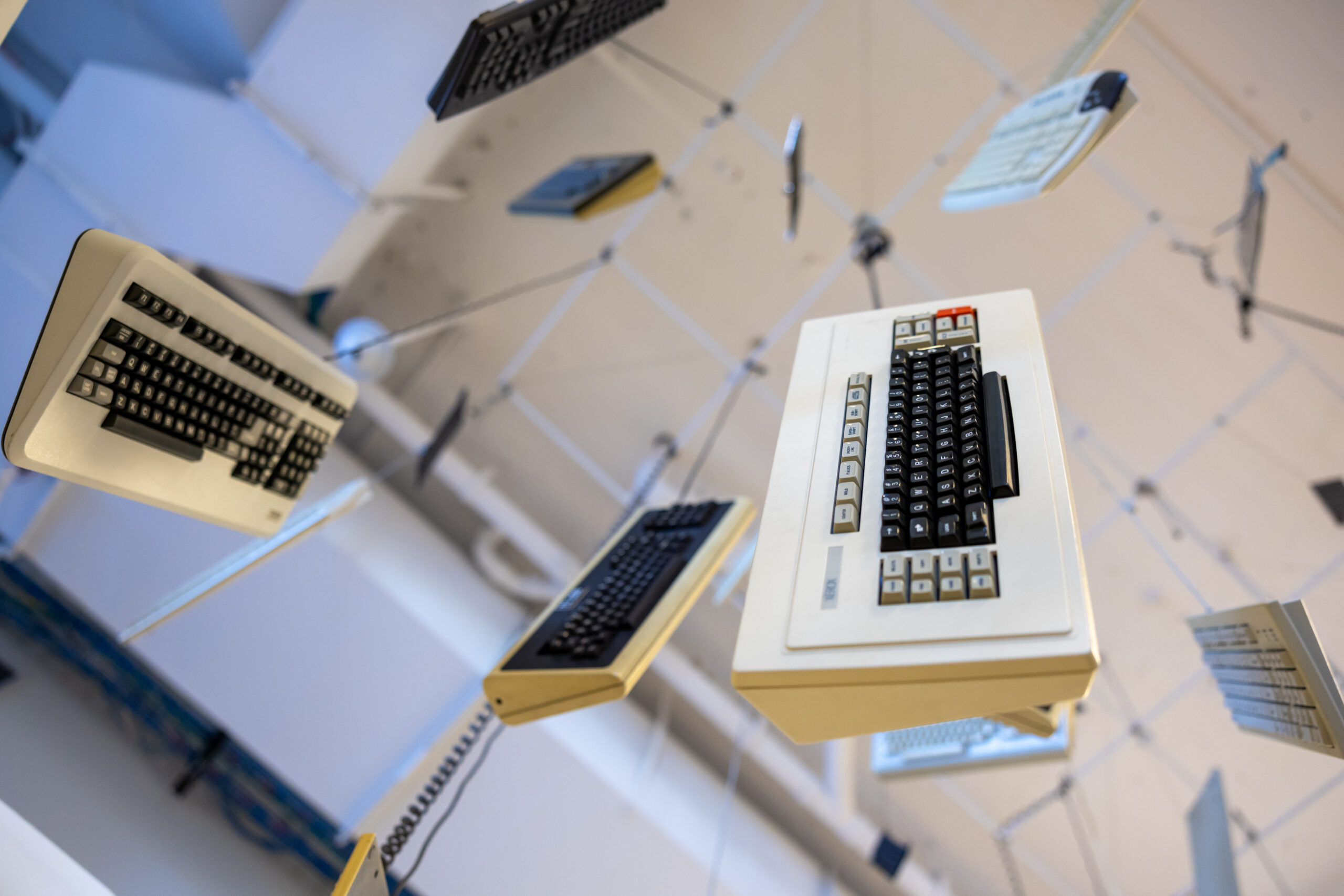
Above the stairwell connecting the 15th and 16th floors of 100 AOA hangs an installation of over 30 vintage computer keyboards from our co-founder David Siegel’s personal collection of historical tech.
Stairwell Wall Graphics (NYC 100.10-12)
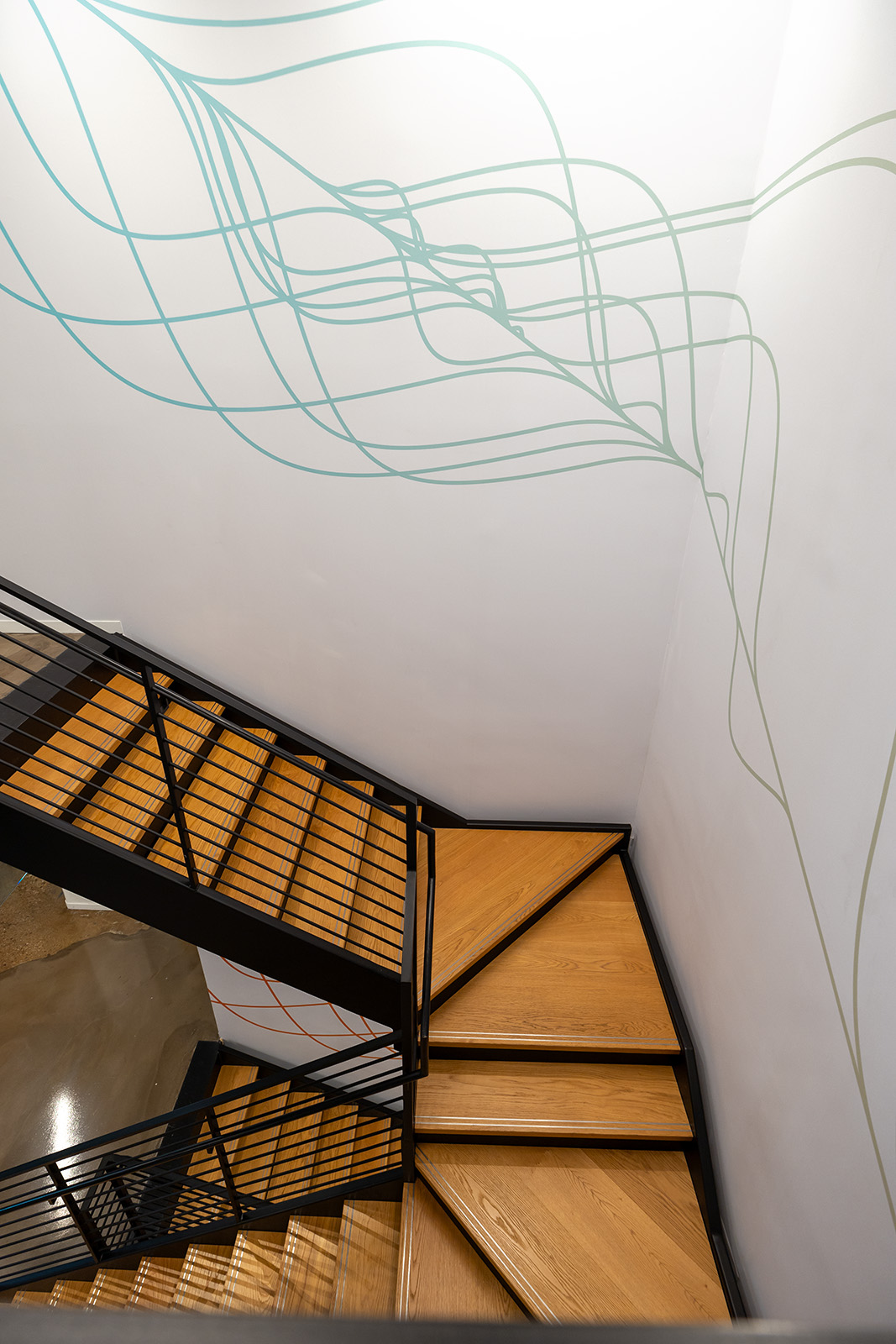
These stairwell graphics are based on one of our historical principles: “We dare to be different. have courage.” The pattern has a backstory: Real innovation challenges the status quo. In a triumph of the scientific method over superstition, sabermetrics and similar techniques revolutionized baseball by applying a quantitative, statistical approach to improving teams’ performance. This pattern represents the win-loss percentage, relative to payroll-based expectations (the straight line), of all major league baseball team-seasons from 2000 to 2014. The largest waveform belongs to the Oakland Athletics—a pioneer in applied statistical analysis.
Pantry Wall Grahpics (Shanghai)
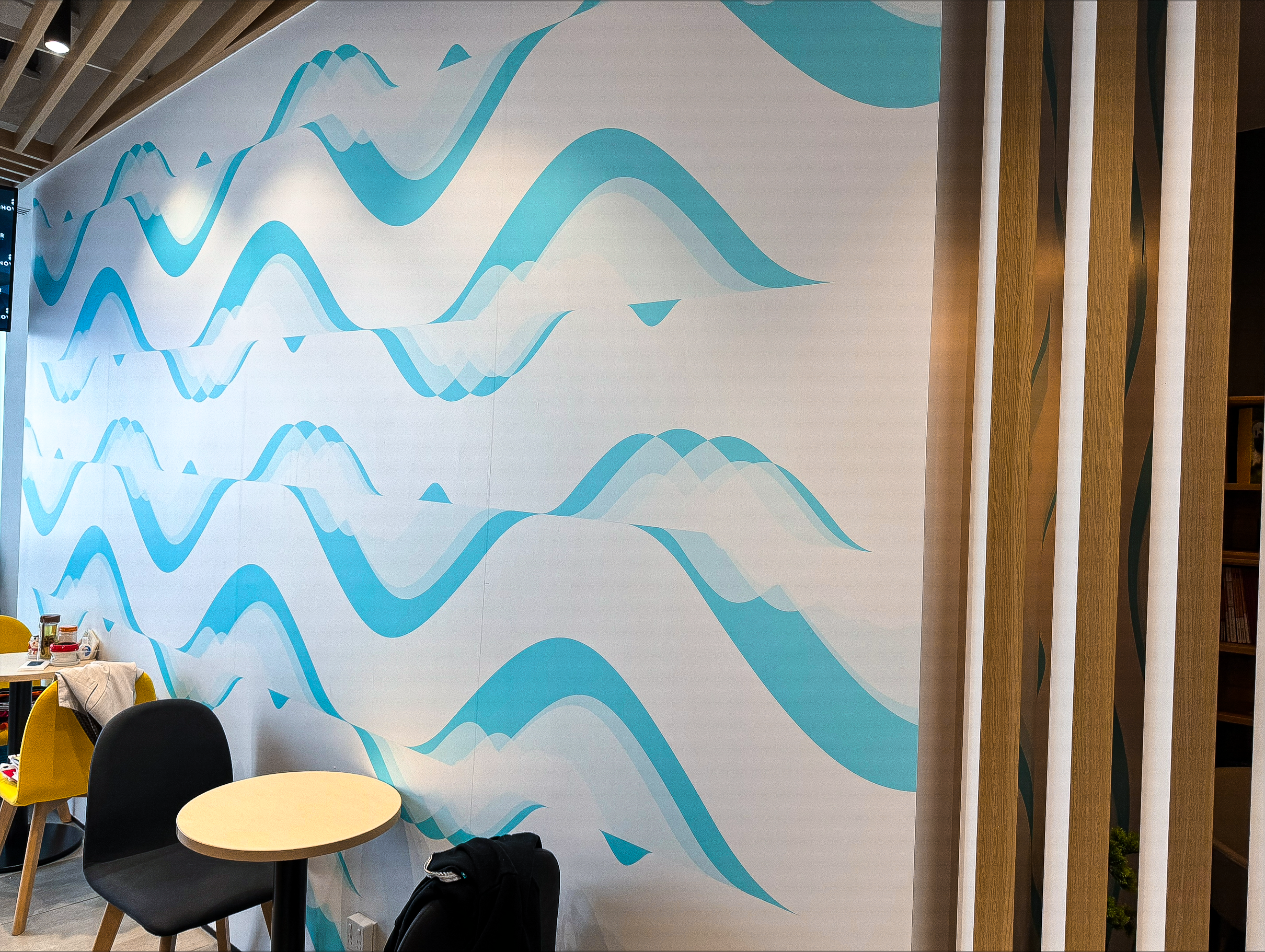
These wallcovering graphics are based on one of our historical principles: “We dare to be different. have courage.” The pattern has a backstory: Real innovation challenges the status quo. In a triumph of the scientific method over superstition, sabermetrics and similar techniques revolutionized baseball by applying a quantitative, statistical approach to improving teams’ performance. This pattern represents the win-loss percentage, relative to payroll-based expectations (the straight line), of all major league baseball team-seasons from 2000 to 2014. The largest waveform belongs to the Oakland Athletics—a pioneer in applied statistical analysis.
Stairwell Wall Design (NYC 100.5-100.7)
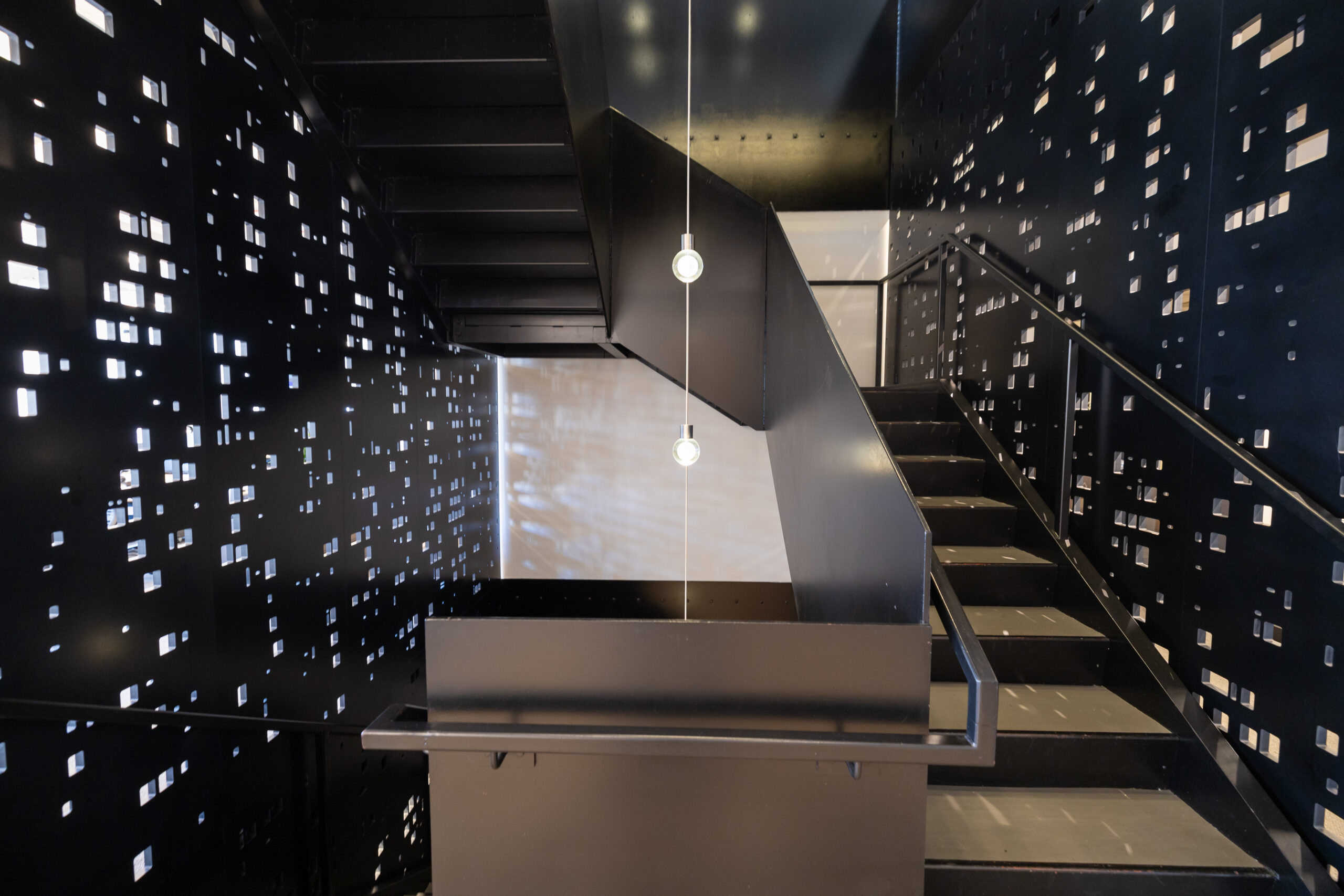
The metal walls of the stairwell between the 5th and 7th floors have been milled with a pattern that visually encodes text from “Grundgesetze der Arithmetik” (The Foundations of Arithmetic) by Gottlob Frege.
TS Cup: Air Hockey (NYC 100.16)
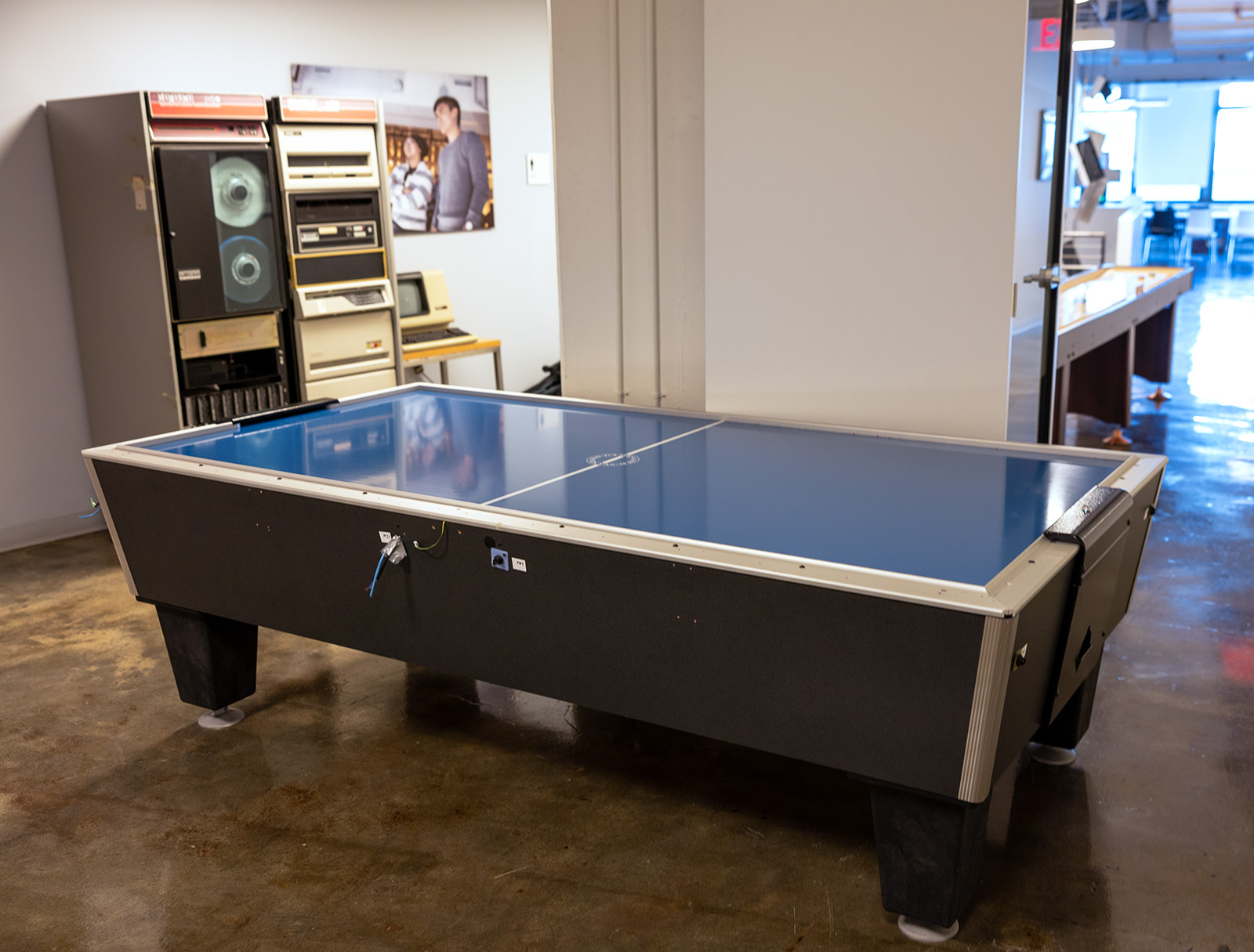
This air hockey table was once the site of a fierce AI vs. human competition: the 2016 TS Cup tournament. A team of engineers led by Mark Roth retrofitted the table with motorized paddles and computer vision so that human vs human, human vs AI, and AI vs AI games could be played on it. The winner of the human bracket competed against the winner of the AI bracket for the championship during a live event in the Quad.
Elevator Lobby Graphics (NYC 100.10)
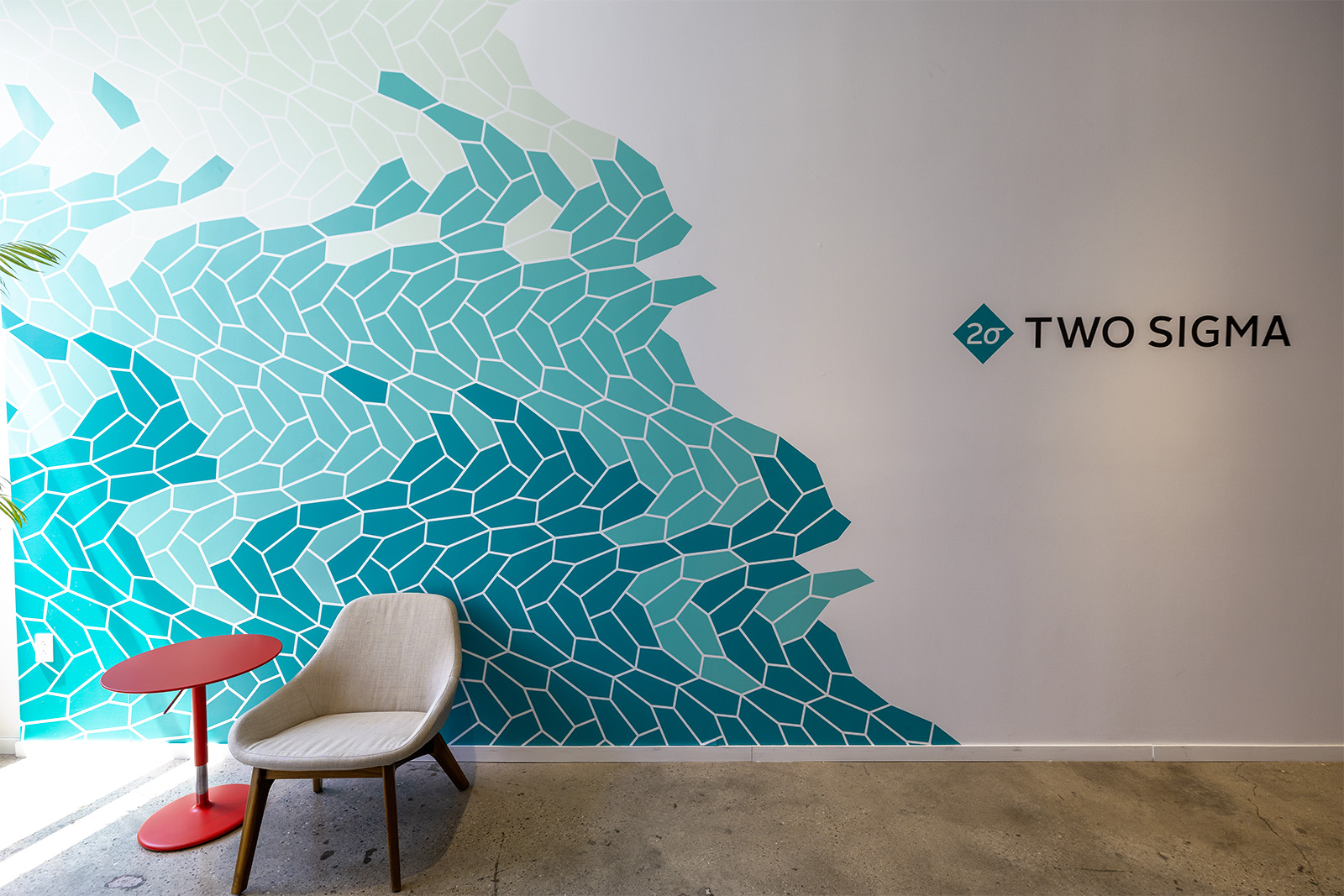
These wallcovering graphics are based on one of our historical principles: “We are scientists. Always be discovering.” The pattern has a backstory: How many different kinds of convex pentagons exist that can tile a plane? For decades, only 14 types of these elusive, “tessellating” pentagons were known. But in 2015, a team of mathematicians using an algorithm and a cluster of computers found a 15th type—the one shown in this pattern. To us, it’s more than just an elegant shape. It’s a symbol of discovery.