


72 matches, 215 goals, and enough chaos to challenge everyone’s pre-tournament predictions. We built a six-metric model to track this tournament in real time against every World Cup back to 1930, and the group stage has already pushed several of our scores into historically significant territory. The numbers are in. Here’s what our model makes of them.
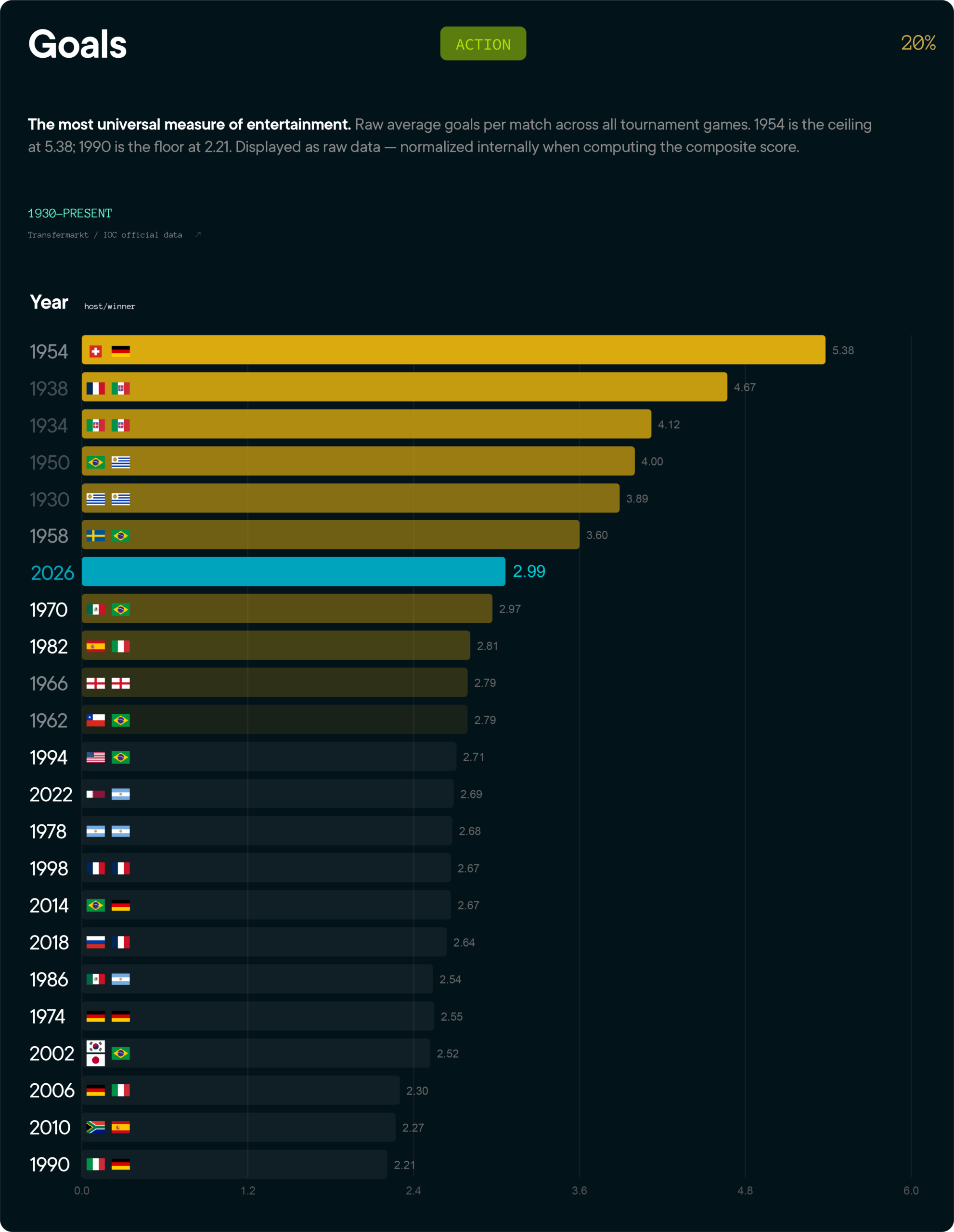
Goals (20%) — The 48-team format delivered exactly what it promised on goals. 215 goals across 72 matches (a new FIFA World Cup group stage record, up from 172 in Qatar 2022) and the highest average since Sweden 1958. The expansion created more mismatches, particularly in the final matchday blowouts. But it wasn’t just weak teams being hammered, top players also converted low-xG shots at an unusually high rate, suggesting genuine quality behind the numbers.
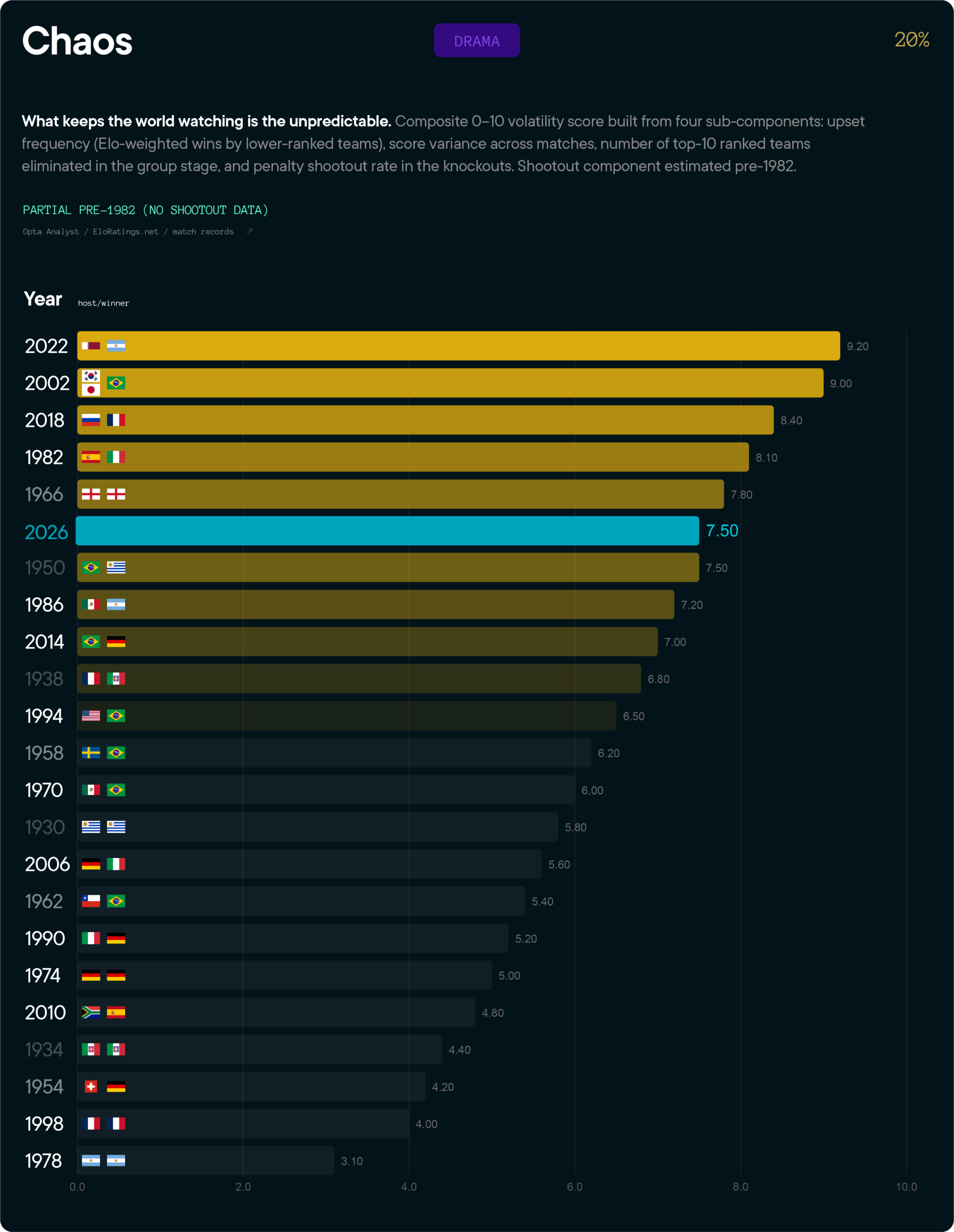
Chaos (20%) — The chaos was real but uneven. On one hand, Spain held to a 0-0 draw by Cape Verde, Belgium drew Egypt, Portugal failed to beat DR Congo, Japan came back twice against the Netherlands. On the other, no top-5 seed was eliminated. In terms of score variance, the same tournament that produced Germany 7-1 also produced five 0-0 draws. That volatility is exactly what the chaos index measures. The knockouts (with no more comfortable group stage mismatches) are where this score will either hold or accelerate dramatically.
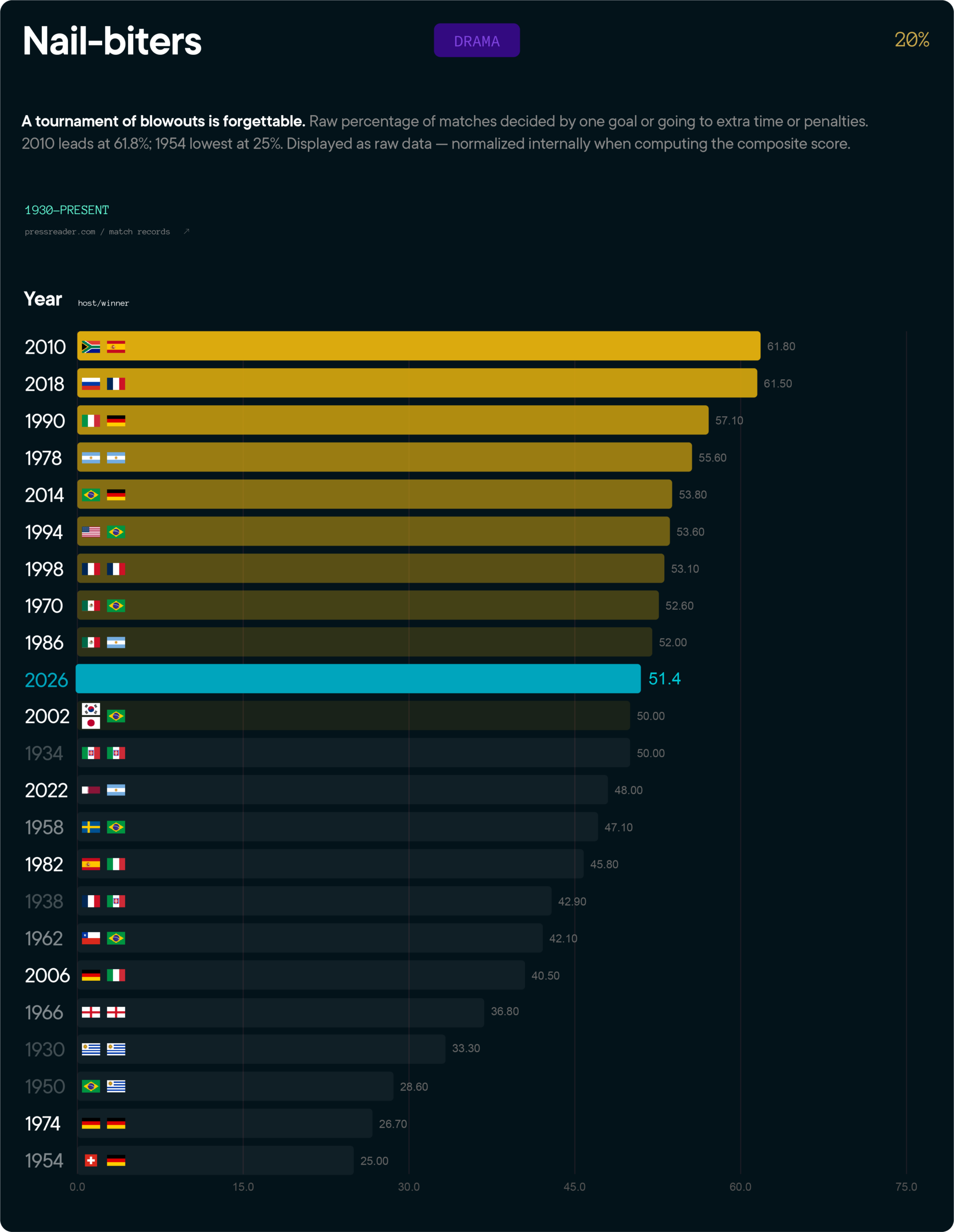
Nail-biters (20%) — More than half of all 72 group stage matches were decided by one goal or ended as a draw. The blowouts pulled the raw percentage down from where it stood after Matchday 1, but the overall picture is of a tournament that genuinely hung in the balance more often than not. We’re looking forward to the knockout round where, by definition, the nail-biter score will almost certainly increase.
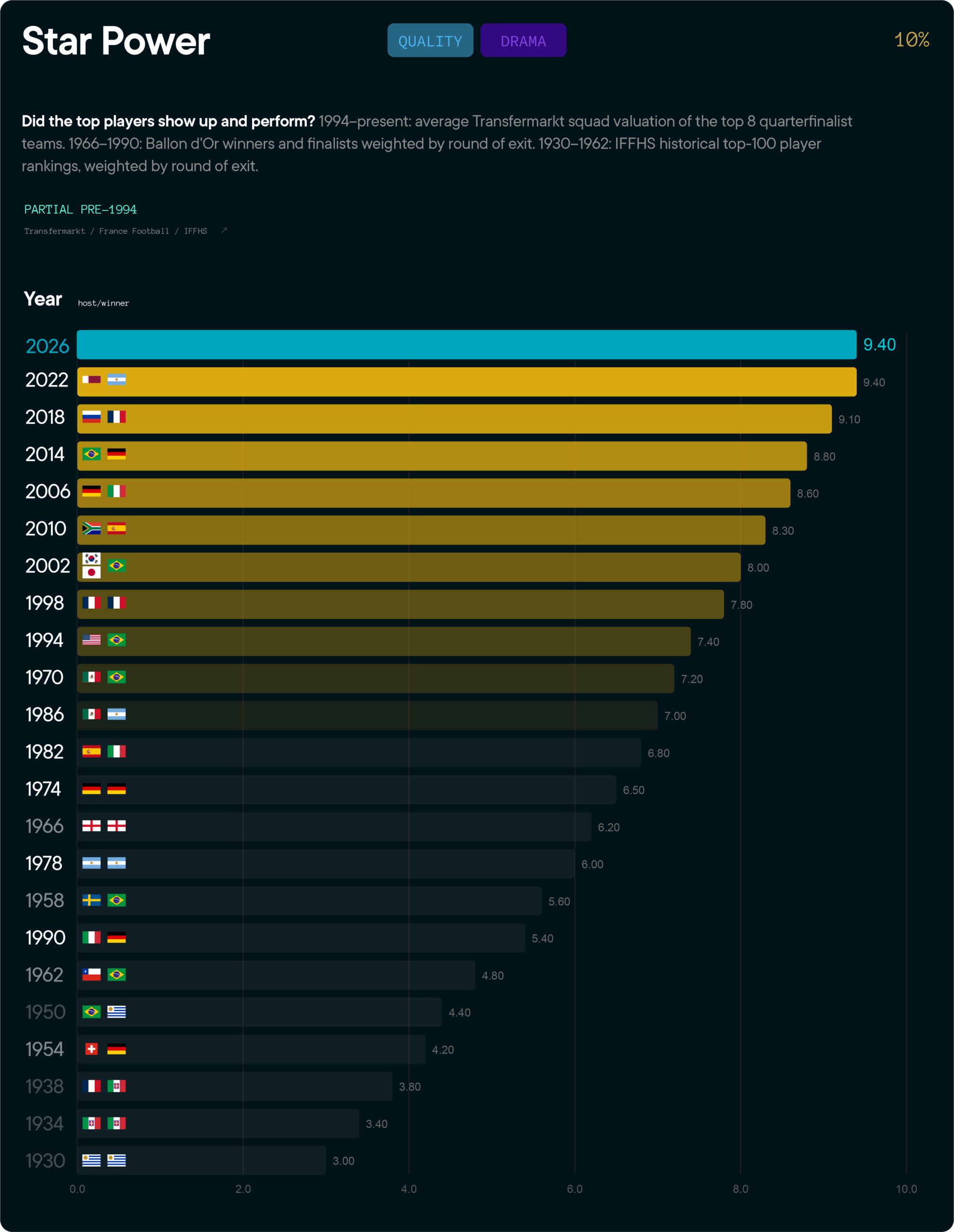
Star Power (15%) — Every major name showed up and progressed: Messi hat-trick in Kansas City, Mbappé breaking the French goals record against Senegal, Haaland on debut, Dembélé hat-trick, Kane, Bellingham, Vinicius, Salah, Ronaldo (finally) scoring. All the players the world came to watch are still in the tournament and the Round of 32 reads like a who’s who of world football. The Star power score goes up when elite talent makes it to the rounds that matter and right now everyone is still standing.
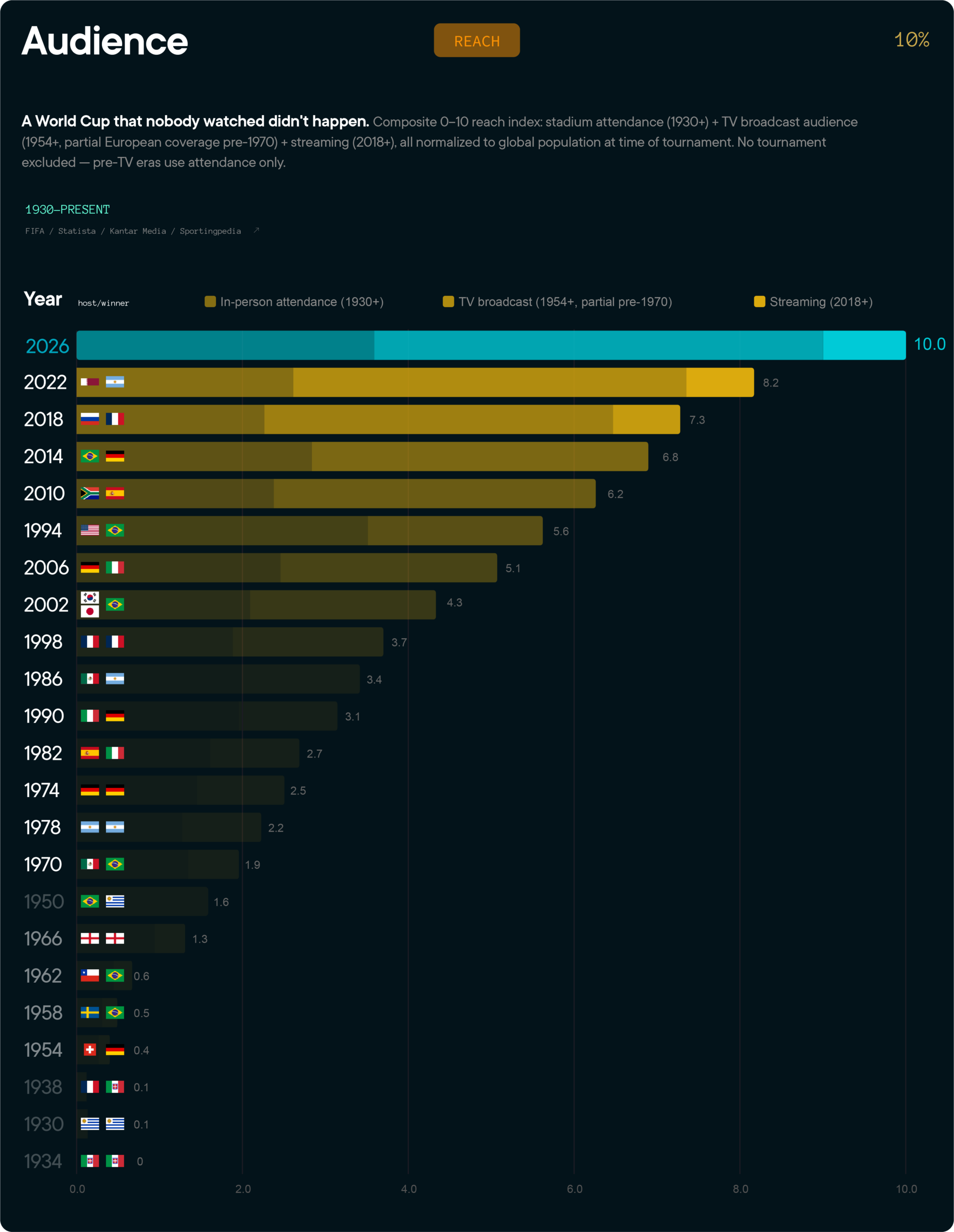
Audience (10%) — As expected, 2026 has already smashed every viewership record and has set the new bar for audience reach. 4,644,549 fans attended group stage matches, breaking the cumulative attendance record set in 1994. On TV, more than 50 million viewers tuned in across the three host nations’ opening matches alone. The USA-Paraguay game drew 27 million viewers, a new all-time record for a US soccer broadcast, and streaming numbers are up dramatically across every platform.
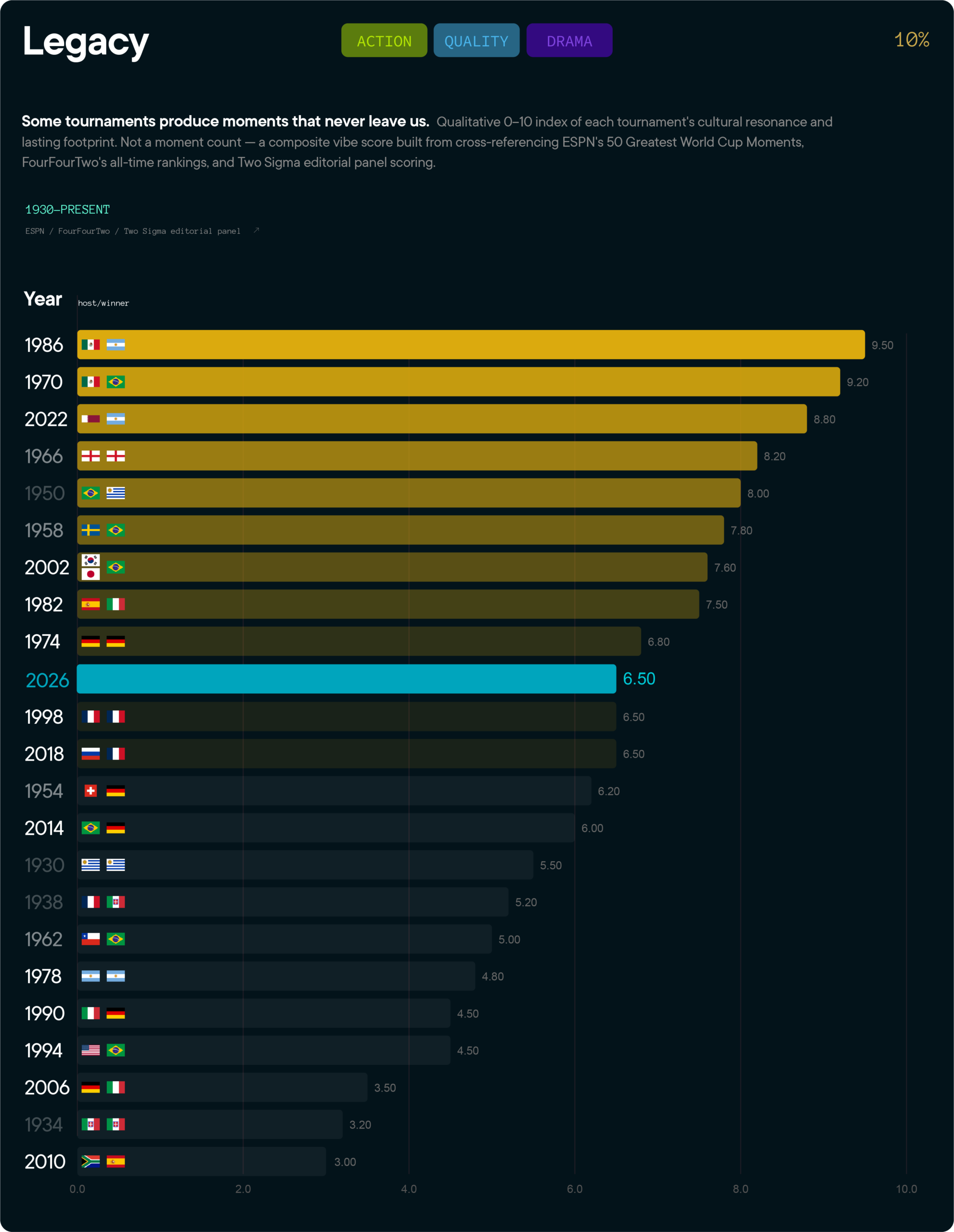
Legacy (15%) — Our legacy score is moving in the right direction but it’s definitely still building. Messi’s first-ever World Cup hat-trick, the Germany 7-1 scoreline that will be cited for years, Cape Verde (pop. 500,000) reaching the Round of 32, DR Congo qualifying for the knockout stage for the first time in their history. What’s missing so far is a truly seismic upset. The group stage gave us chaos but not catastrophe. The knockouts will define whether 2026 enters the permanent cultural conversation.
What the model tells us (so far)
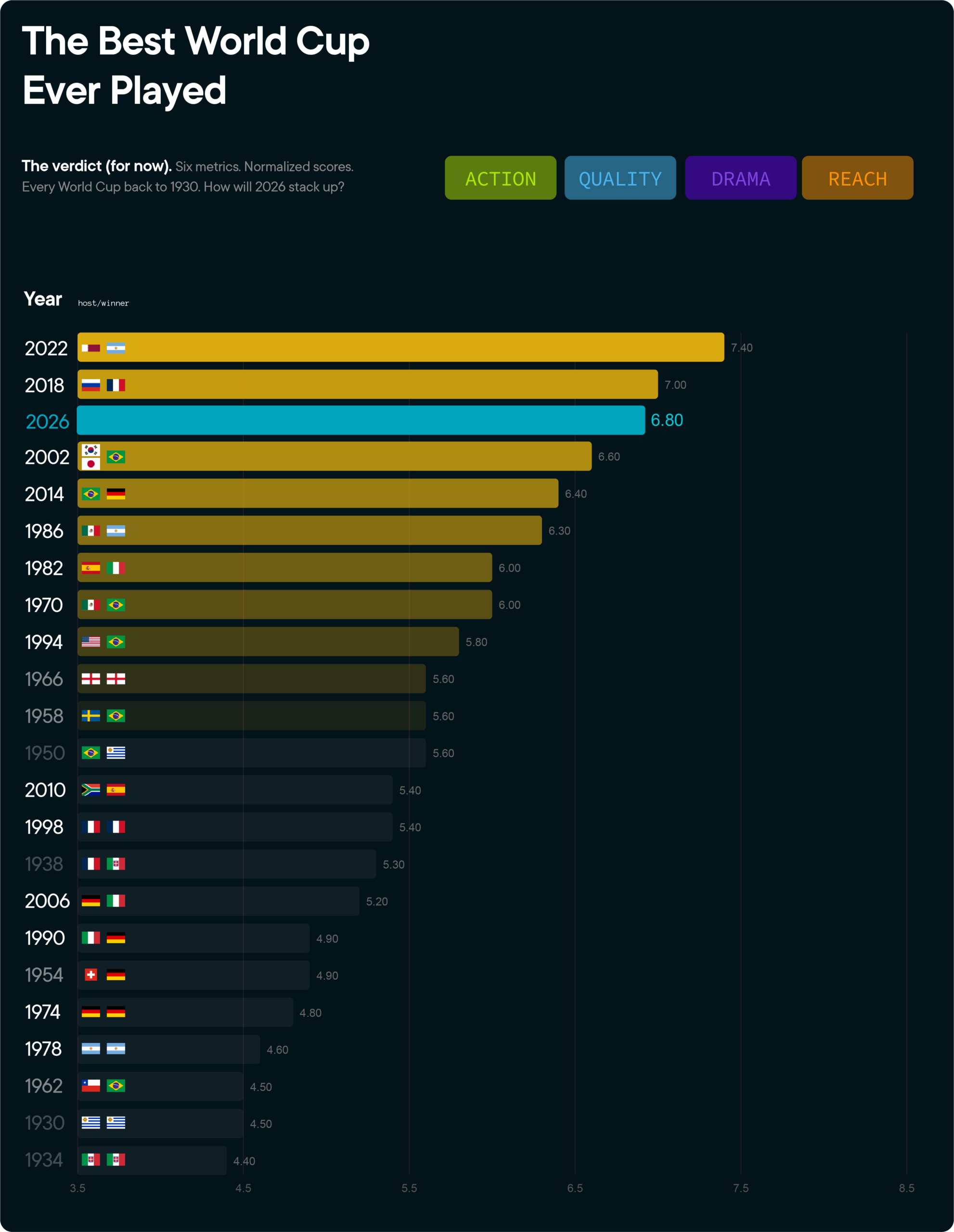
Six metrics, 72 matches, and one number: 6.9. That already puts 2026 above the historical average and in the conversation for one of the great World Cups. But the best is almost certainly still to come. The group stage gave us goals and star power in abundance — now we need the knockouts to deliver on chaos and legacy. One giant-killing. One penalty shootout heartbreak. One moment that gets replayed for decades. That’s all it takes to move this score into the all-time top three. We’ll be updating the model after every round of the knockouts, watching the numbers climb in real time. By the time the final whistle blows in East Rutherford on July 19, we’ll have the verdict.