


39 days. 104 matches. 308 goals. The 2026 World Cup reached its exciting conclusion last night where Spain defeated Argentina 1-0 in extra time. It was the longest, biggest World Cup in history, but was it the best? We built a six-metric model to track this tournament in real time and now we have our answer.
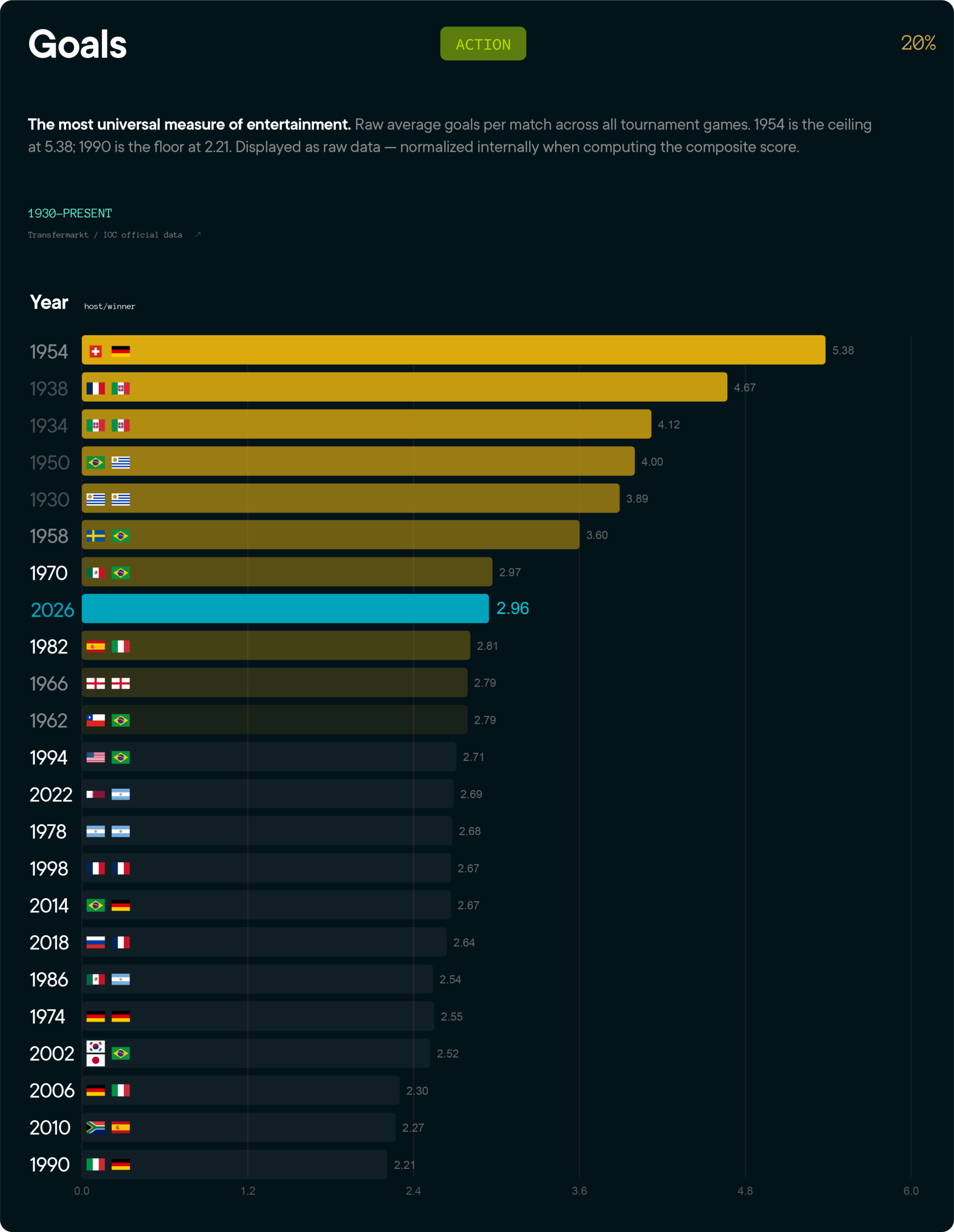
Goals (20%) — The final average of 2.96 goals per game is the highest across a complete tournament since 1998. The group stage delivered an extraordinary 2.99 per game, fueled by the expanded 48-team format. The knockouts tightened things up but the overall volume of goals across 104 matches made 2026 one of the most prolific tournaments of all time.
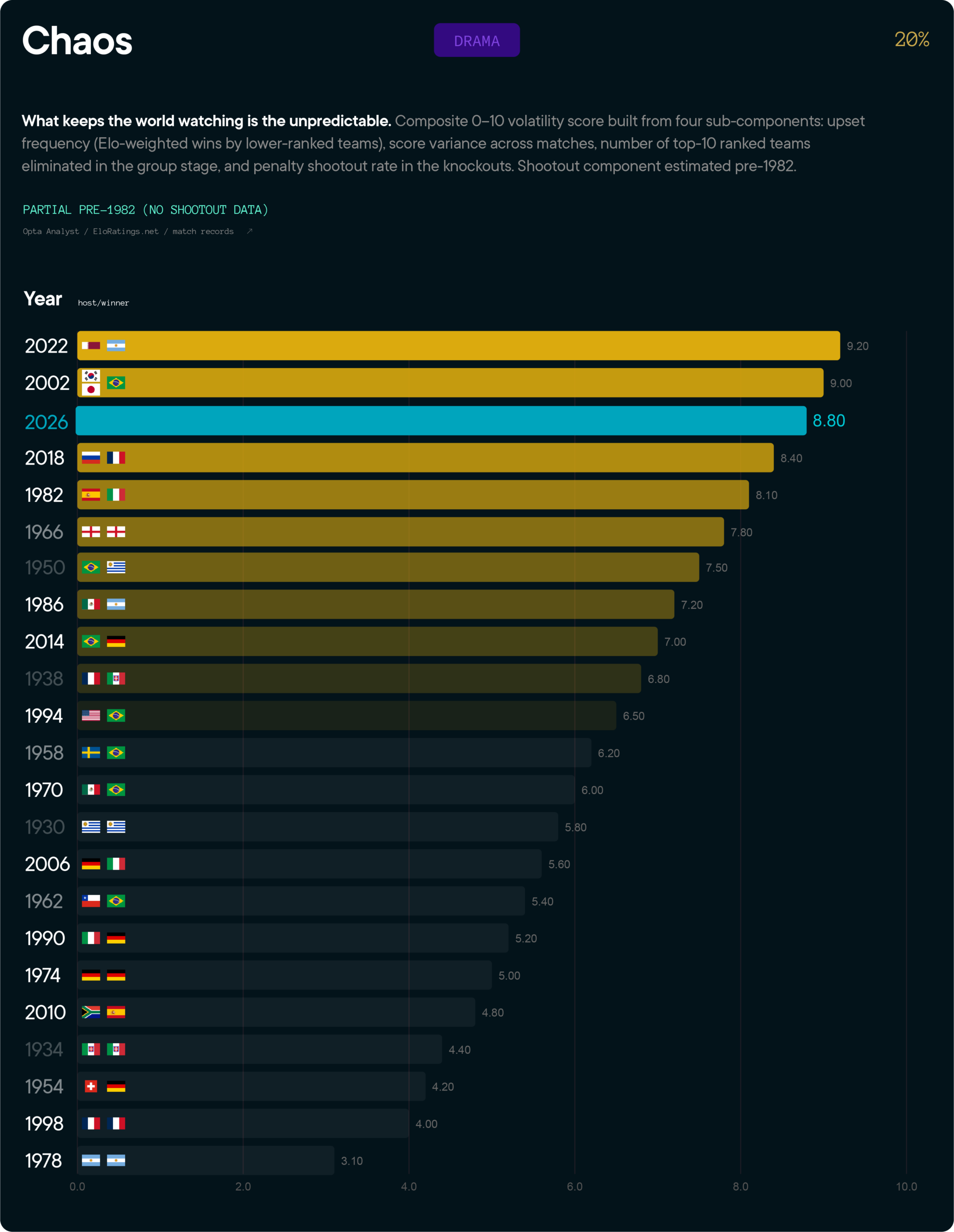
Chaos (20%) — Norway beat Brazil. Morocco reached the quarter-finals (again). Cape Verde took Argentina to 3-2. Belgium demolished the USA 4-1. The chaos index measured upsets, score volatility, top-10 group eliminations, and knockout shootout frequency and 2026 delivered on almost every dimension.
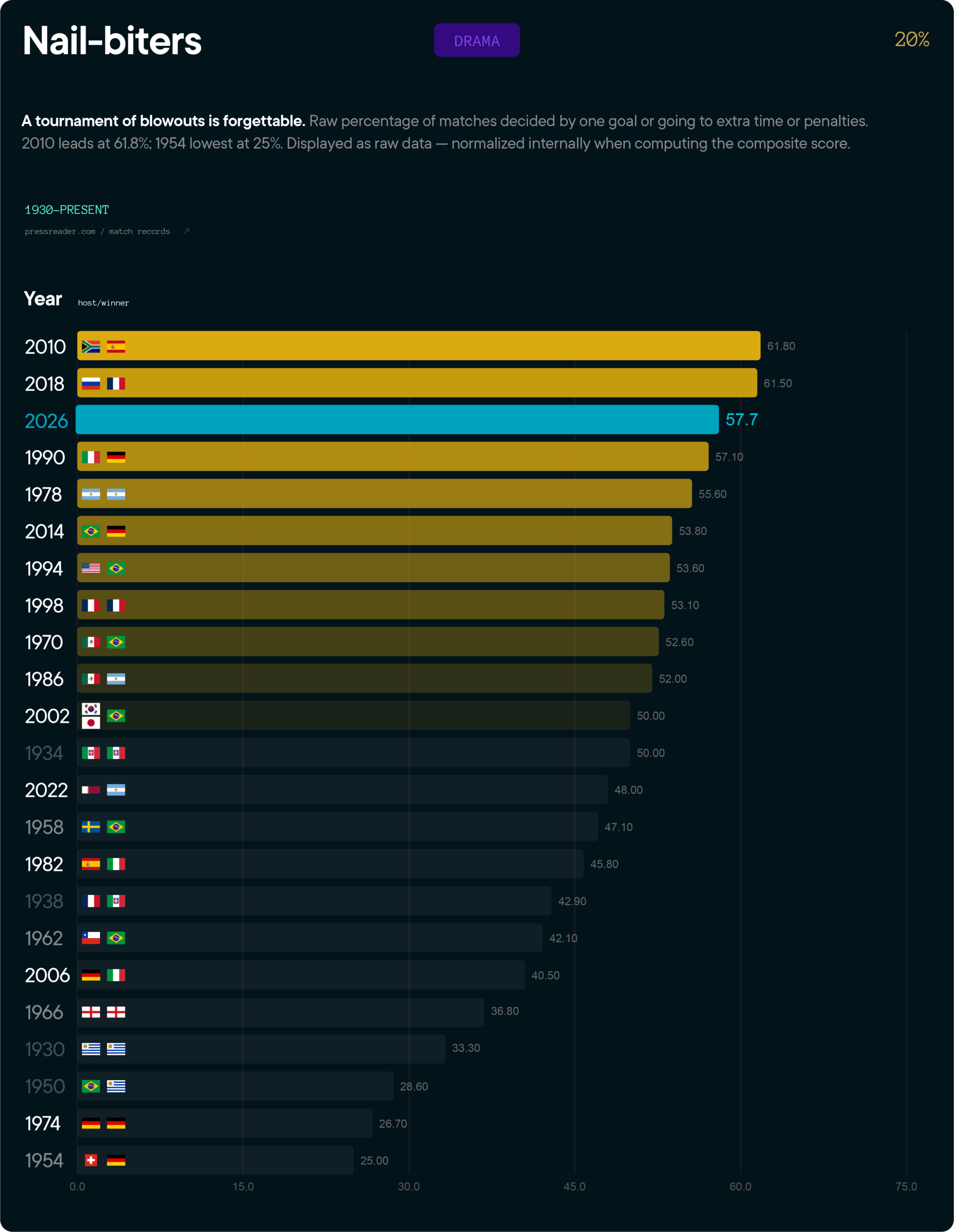
Nail-biters (20%) — More than half of all 104 matches were decided by a single goal or ended in a draw requiring penalties.
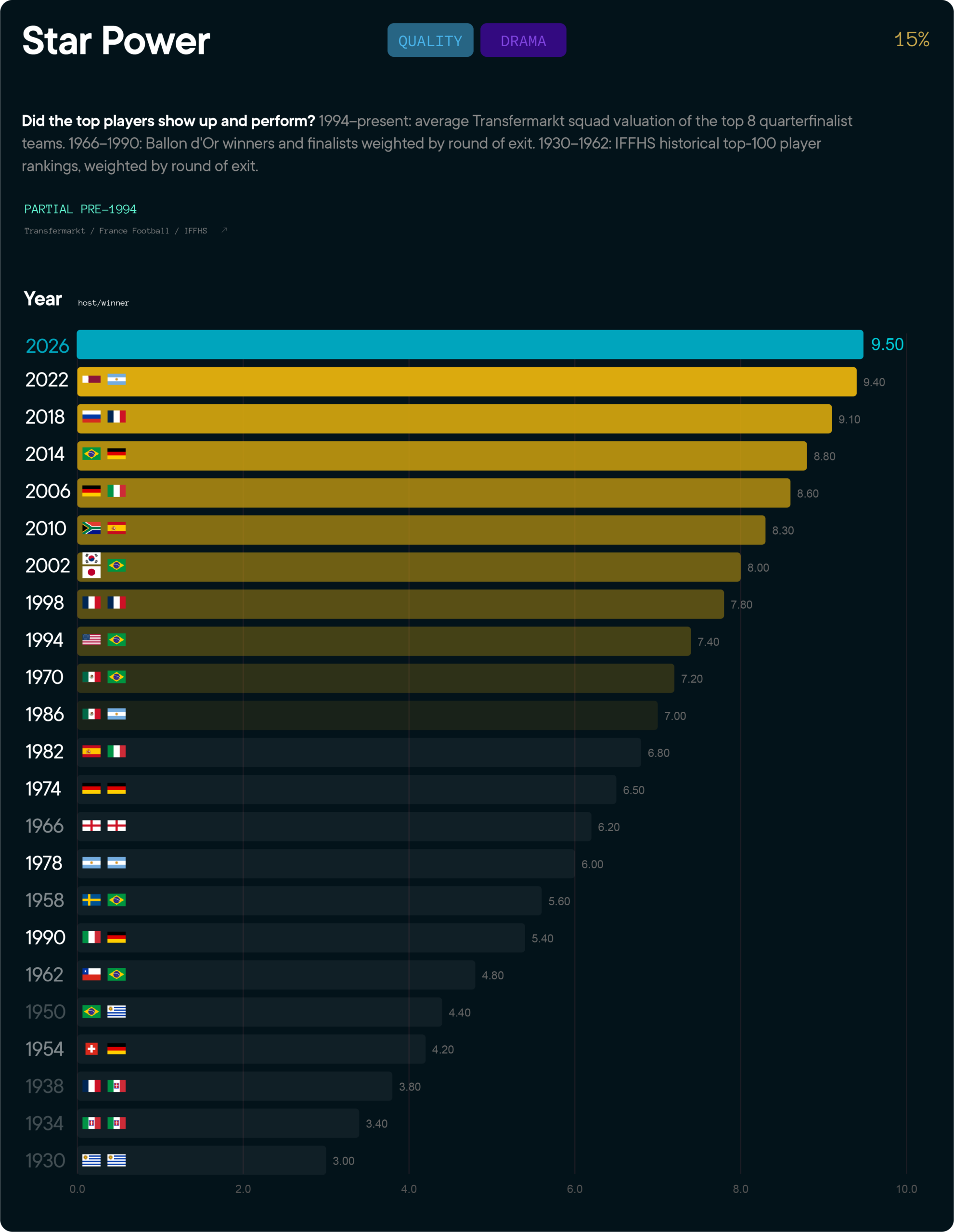
Star Power (15%) — Mbappé’s French scoring record. Haaland’s World Cup debut brace. Kane in the semi-final. Messi — 39 years old, playing in his sixth and final World Cup, reaching the final and losing to a Spanish side that was simply better. The star power metric rewards tournaments where elite talent performs deep into the knockouts. In 2026, every single one of them did exactly that.
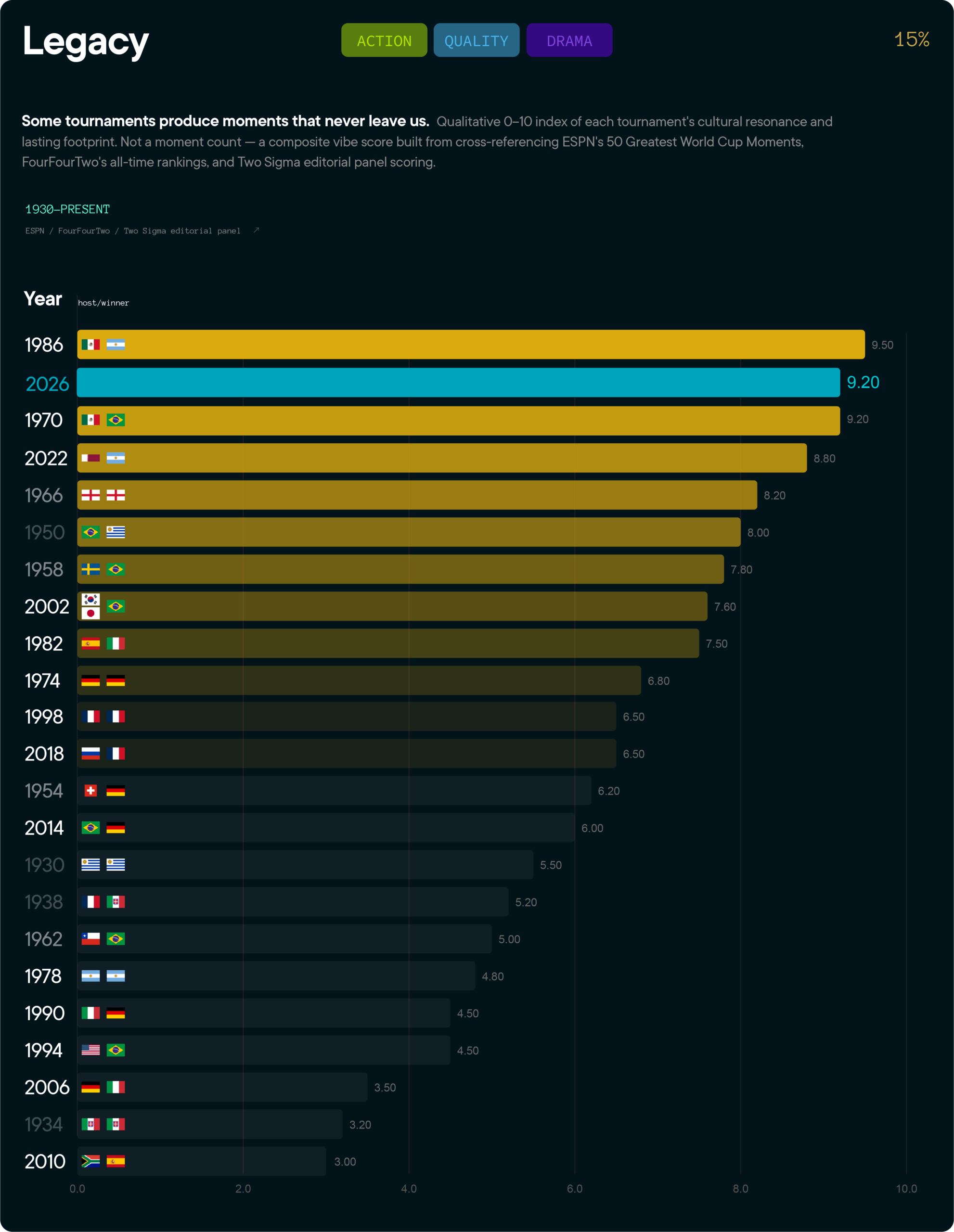
Legacy (15%) — Messi’s final World Cup, denied by a goal in the 106th minute, is the kind of heartbreak that enters the permanent cultural conversation. France 4-6 England was one of the best matches in history and will be shown in highlight reels for decades. Cape Verde and DR Congo reaching the knockouts. Spain lifting the trophy for only the second time, 16 years after their first win in South Africa.
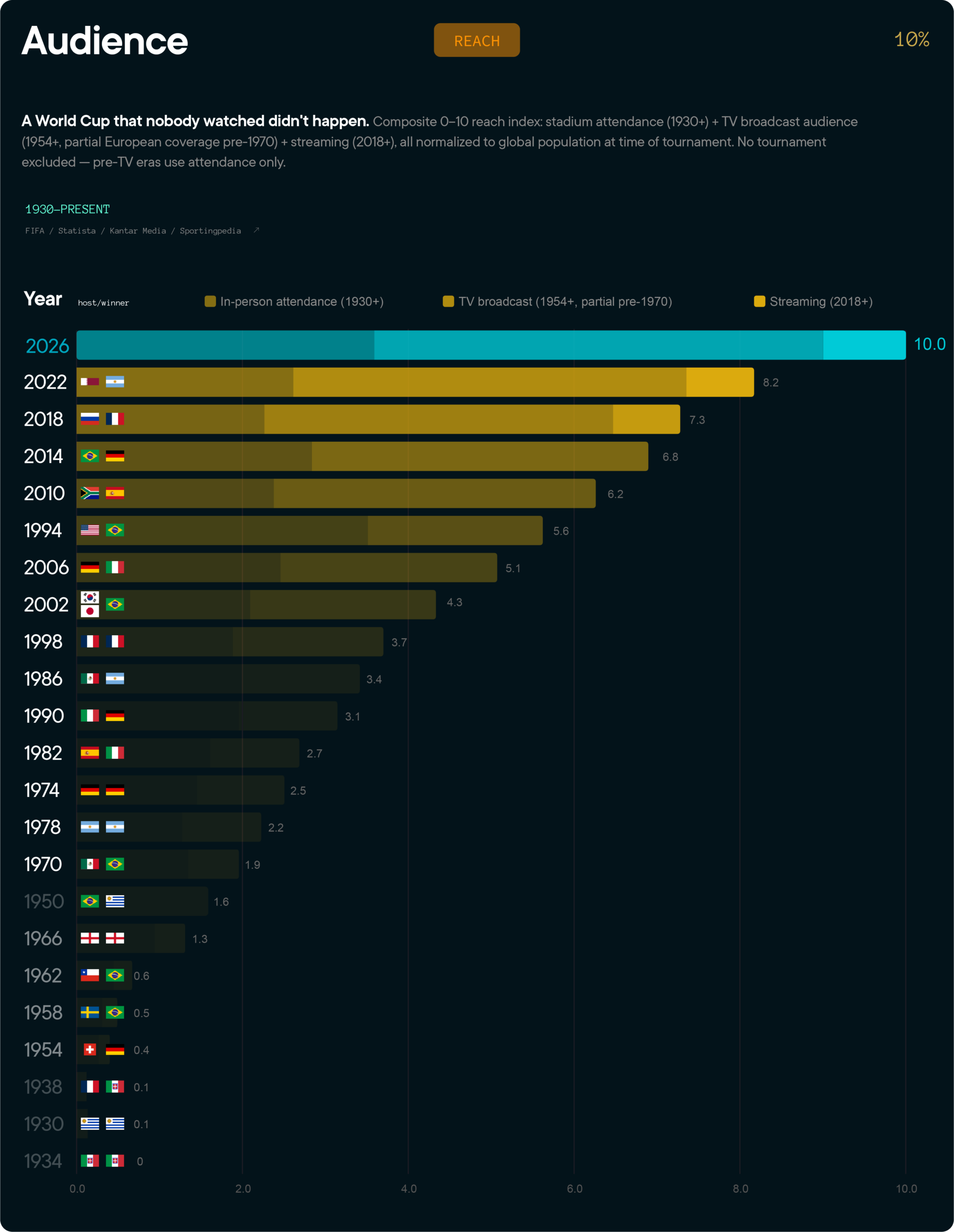
Audience (10%) — Total attendance exceeded 5.3 million and multiple individual matches broke all-time sports broadcast records. Streaming numbers across every platform shattered previous marks. 48 nations, 16 cities, 3 countries. The audience reach score is a perfect 10.0 — the new benchmark against which every future tournament will be measured.
What the Model Says
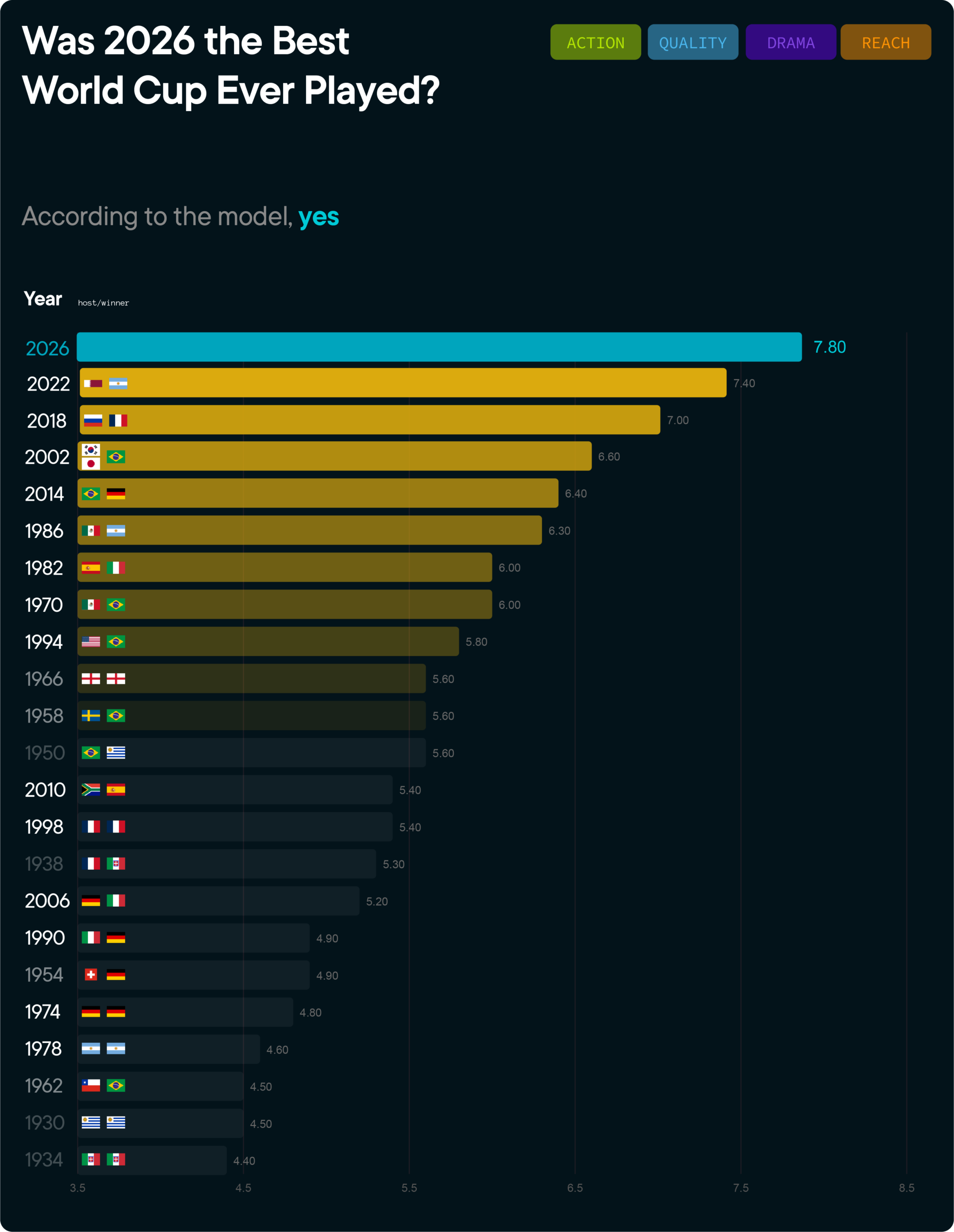
The results are in and the question we asked back in June has an answer. Yes, 2026 was the best World Cup yet. While only 8th in goals and 3rd in both chaos and nail-biters, 2026 had record breaking audience reach and enough star power and cultural resonance to keep us talking for years to come. All six metrics ended at the top of the charts, something that has never happened before in the history of the tournament. Will it hold? The next World Cup will span 3 continents and 6 countries and may expand to a whopping 64 teams. The ceilings will be pushed further and further as the most beautiful tournament gets bigger and longer and we can’t wait to ask the question again in 2030.